Explore the small scale ginger garlic paste making business in India, including market size, demand, investment requirements, marketing strategy, and profit potential for new food processing entrepreneurs.
Table of Contents
Small Scale Ginger Garlic Paste Manufacturing Business Opportunity
The small scale ginger garlic paste manufacturing business has emerged as one of the most promising ventures in the food processing sector. This product, once limited to home kitchens, is now a fast-moving consumer good with rising demand across cities, towns, and rural areas.
The growing preference for convenient, ready-to-use ingredients has made ginger garlic paste an essential part of both household cooking and commercial food preparation. For new entrepreneurs, this business offers a profitable opportunity that can begin with modest capital, limited space, and a simple setup, even from home.
Ginger Garlic Paste Market Overview and Growth Potential in India
India is a global leader in the production of ginger and garlic, making it ideally positioned for a small-scale ginger garlic paste business. The country is the world’s largest producer of ginger and the second-largest producer of garlic, ensuring a consistent and affordable supply of raw materials.
The global ginger product market is valued at approximately 1.5 billion dollars in 2025 and is projected to reach 2.3 billion dollars by 2033, growing at a steady annual rate of five percent. Within India, the cooking paste segment, which includes ginger garlic paste, is valued at about ₹526 crore in 2024 and is expected to rise to ₹2,558 crore by 2033, at a compound annual growth rate of more than eighteen percent. This rapid growth is driven by changing food habits, urbanization, higher disposable incomes, and increasing demand for time-saving cooking solutions.
Importance of Ginger Garlic Paste and Rising Consumer Demand
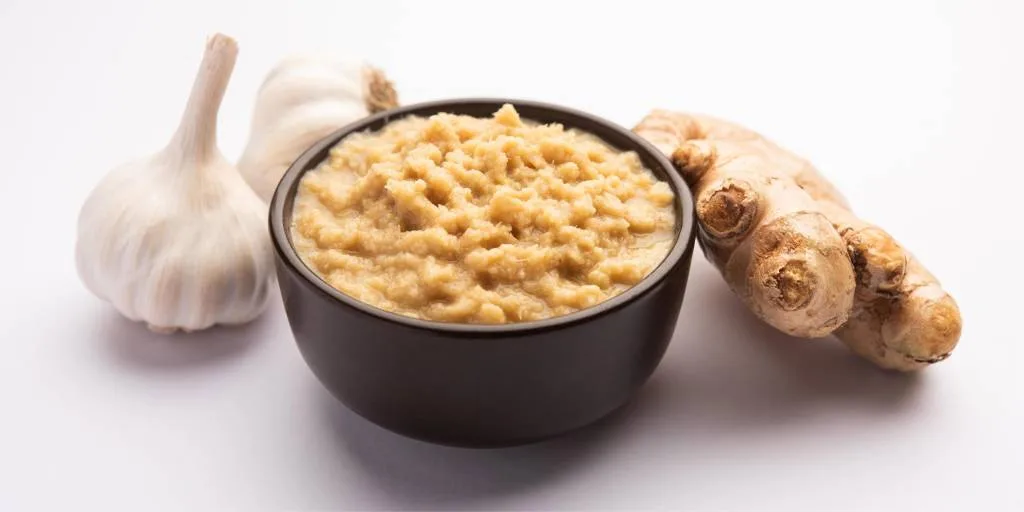
Ginger garlic paste is widely recognized for its flavor, aroma, and health benefits. It is an essential ingredient in curries, sauces, pickles, and meat preparations, and is also extensively used by restaurants and food processors for consistency and efficiency. Beyond its functional use, the product offers branding and packaging opportunities suitable for different consumer segments. Small sachets cater to individual users, while jars and bulk containers serve families, hotels, and catering businesses. The demand for premium, preservative-free, and eco-friendly packaging is also increasing, giving small-scale ginger garlic paste manufacturers a chance to stand out with innovative presentation and quality assurance.
Marketing and Distribution Strategies for a Ginger Garlic Paste Business
A strong marketing strategy is vital for the success of a small-scale ginger garlic paste business. Distribution should cover both traditional and modern retail channels, including supermarkets, local grocery stores, and online platforms. A professional website, along with social media promotions and collaborations with food influencers, can help establish brand awareness and consumer trust. For consistent sales volume, manufacturers should focus on building partnerships with restaurants, hotels, and catering services that regularly purchase in bulk. In regional markets, community promotions and participation in local food fairs can also help attract customers.
Investment, Cost, and Profit Potential of a Ginger Garlic Paste Manufacturing Unit
Setting up a small scale ginger garlic paste manufacturing unit requires a relatively low investment compared to many other food processing businesses. A sample financial structure may include a promoter’s contribution of about fifteen percent, with the balance covered by bank loans and available government subsidies. A total initial investment of around ₹1.07 lakh is often sufficient for a basic setup, depending on the production scale.
The business can typically achieve break-even within two years, and profit margins improve steadily as production and distribution expand. Since raw materials are locally available, operating costs remain moderate, leading to sustainable profitability.
- Land and Building = On lease
- Plant machinery = 4.290 Lakh
- Laboratory equipment = 0.600 Lakh
- Transport vehicle = 4.600
- Cost of power connection = 0.100 Lakh
- Cost of electrification = 0.100 Lakh
- Erection and commissioning = 0.300 Lakh
- Cost of machinery spares = 0.100 Lakh
- Cost of office equipment = 1.000 Lakh
- Company formation expenses = 0.500 Lakh
- Gestation period expenses = 0.300 Lakh
- Initial advertisement and publicity = 9.000 Lakh
- Contingencies = 0.500 Lakh
The figures may vary depending on the unit size.
Government initiatives and food processing incentive schemes in India are encouraging entrepreneurs to invest in value-added products and expand manufacturing capacity. Entrepreneurs can also explore various government subsidies for small food businesses in India, which provide financial support, technology upgrades, and credit-linked capital subsidies for food processing units.
Infrastructure and Setup Requirements for Ginger Garlic Paste Production Unit
The infrastructure for a small scale ginger garlic paste plant can be established in a space of approximately 600 square feet. The location should have a reliable water and electricity supply, along with proper ventilation and hygiene facilities. A semi-automatic production setup is ideal for small entrepreneurs as it balances output and investment.
The main equipment includes a water jet washer, skin peeling machine, fruit mill or crusher, pulping machine, stainless steel mixing tanks, and packing and sealing machines. These machines can be sourced from local manufacturers at reasonable prices, allowing easy scalability as demand increases.
Machinery requirements:
- Water Jet Washer
- Skin Peeling Machine
- Fruit mill / Crusher
- Pulping Machine
- Stainless Steel Tank
- Packing Machine
- Sealing Machine
- Weighing Machine
- Cartoon Packing Machine
Ginger Garlic Paste Production Process
The production process for ginger garlic paste is straightforward and well-suited to small scale operations. Fresh ginger and garlic are procured directly from farms or wholesale markets. They are thoroughly washed using pressurized water to remove dirt and impurities. The outer skins are peeled using mechanical peeling equipment, and the cleaned produce is then crushed and pulped into a fine paste.
Food-grade preservatives are mixed in stainless steel tanks to maintain freshness and extend shelf life. The finished paste is packed into leak-proof pouches, jars, or bulk containers using automatic sealing equipment. Proper labeling and batch coding should be done before dispatch to the market. Maintaining hygiene and quality control at every stage ensures the product meets food safety standards and builds customer confidence.
Legal and Regulatory Compliance for Ginger Garlic Paste
Maintaining strict food safety standards for processed food products is essential to ensure consumer trust and regulatory compliance in the packaged food industry.
Every small scale ginger garlic paste manufacturer must comply with national and state-level food safety regulations. Before starting production, the entrepreneur should obtain an FSSAI license, GST registration, and local business permits. A No Objection Certificate from the State Pollution Control Board is recommended to confirm that waste management and environmental norms are being followed.
Consulting with a small business advisor or food industry expert can help ensure all documentation and compliance requirements are met. Proper licensing and certification also enhance market credibility and make it easier to partner with larger distributors and retailers.
Business Expansion and Diversification
Advances in research and innovation in food processing are helping manufacturers improve shelf life, packaging, and value addition in processed food products. Increasing innovation in the food processing industry is helping small manufacturers improve efficiency, product consistency, and packaging quality.
Once a small scale ginger garlic paste unit is well-established, the same production setup can be used to make related products such as onion paste, tomato puree, and ready-to-cook curry bases. This diversification helps increase sales and improve the utilization of existing machinery and workforce. It also allows the business to cater to different customer preferences and expand into new markets without major additional investment.
Conclusion
In conclusion, the small scale ginger garlic paste manufacturing business presents an excellent opportunity for entrepreneurs seeking a profitable and scalable venture in the food processing sector. The demand for ginger garlic paste continues to grow rapidly, supported by strong domestic production, changing consumer lifestyles, and increasing awareness of hygiene and convenience.
With proper planning, marketing, and adherence to food safety standards, this business can provide steady income, long-term growth, and a strong market presence. It is an ideal option for small business owners who wish to enter the expanding world of processed foods with a low-risk, high-demand product.
💡 FAQs on Ginger Garlic Paste Manufacturing
Ginger Garlic Paste is a blended condiment made from fresh ginger and garlic, widely used in cooking for its strong flavor and health benefits. Growing demand for convenient ready-to-use ingredients has increased its popularity in packaged food markets.
Yes. It is ideal for small scale entrepreneurs because it requires moderate investment, limited space, and easily available raw materials. Production can begin on a micro scale and expand gradually.
You typically need an FSSAI license, GST registration, Udyam registration for MSME benefits, and in some cases a Pollution Control Board NOC and local trade license.
A small manufacturing unit may require an investment of around ₹1 lakh to ₹5 lakh depending on machinery, packaging, and working capital.
Key machines include washers, peeling machines, crushers or fruit mills, pulping machines, mixing tanks, and sealing or packaging machines.
Most small scale units can reach break-even within two years depending on sales volume, marketing strategy, and distribution reach.
You can market the product through supermarkets, grocery stores, online marketplaces, social media promotions, influencer marketing, and partnerships with restaurants and catering businesses.
Yes. The same equipment can also produce products like onion paste, tomato puree, and ready-to-cook curry bases.
Maintaining hygiene, using fresh ingredients, following FSSAI guidelines, and storing products in sanitized airtight containers are essential quality measures.
Yes. India’s strong production of ginger and garlic provides export opportunities, provided manufacturers meet international quality and packaging standards.

Have a news or topic to share with industry? Write to us editorial@pfionline.com