Food manufacturing is evolving rapidly. This article explores food processing technologies shaping modern manufacturing, from AI and automation to robotics, extrusion, freezing, X-ray inspection and emerging innovations. While the overall subject is broad, the individual articles, linked here, offer deeper insights into specific technologies, applications, and industry trends.
Food processing is entering a new era. An industry once driven largely by mechanical systems is now being shaped by artificial intelligence, robotics, advanced thermal technologies, precision inspection and data-led decision-making. For manufacturers, the need to innovate is growing as consumers expect higher quality, regulators demand stronger safety controls, and production systems must deliver greater efficiency.
Table of Contents
This article brings together key technologies shaping modern food manufacturing. Whether you are assessing automation, exploring new product development, improving processing efficiency or strengthening quality assurance, the resources below provide practical insights into the technologies and applications that matter most.
1. Automation and Robotics in Food Manufacturing
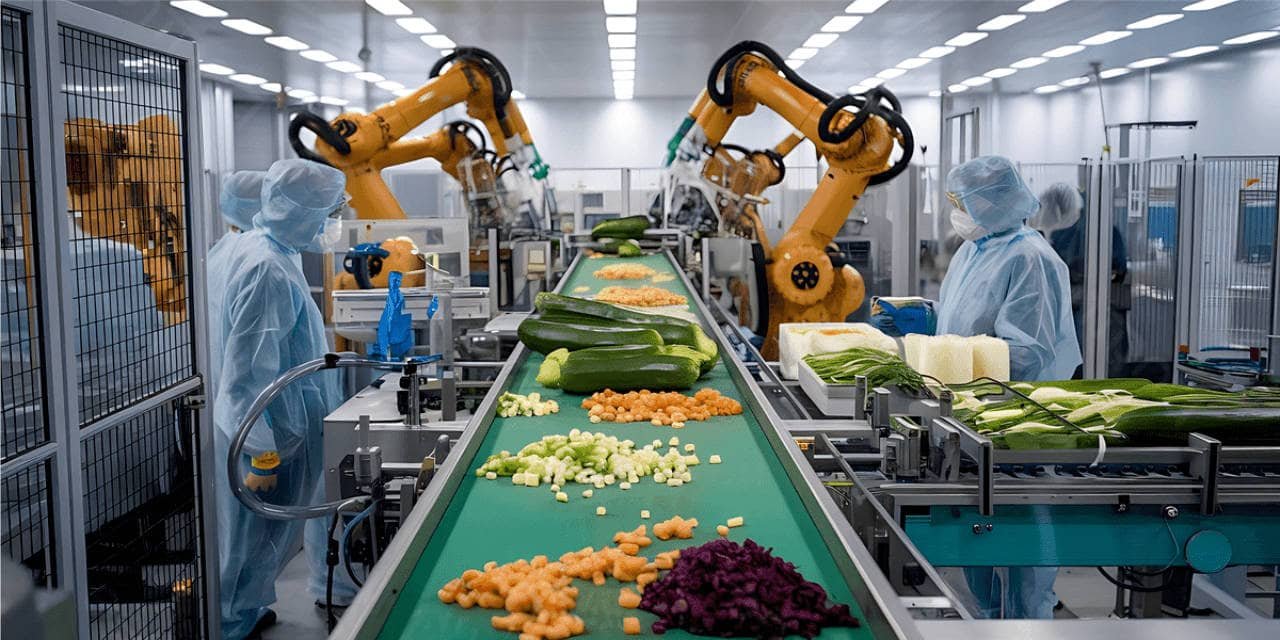
Automation is among the fastest-changing areas of food processing. AI-driven production planning, smart manufacturing systems and collaborative robots are changing how modern food plants operate. These technologies are being adopted not only to address labour requirements, but also to improve consistency, food safety, productivity and production capacity.
Key topics in this article
- AI and automation in food manufacturing – How machine learning and smart systems are improving production planning and line performance.
- Top 10 technologies transforming food processing – An overview of the major technologies reshaping food processing and the growing role of automation.
- Robots in the food industry – How robotics can improve productivity, workplace safety and process consistency.
- Cobots in the F&B industry – How collaborative robots are enabling closer and safer human-machine interaction on the factory floor.
Together, these resources provide a practical starting point for manufacturers assessing where automation can add value and which applications are best suited to their operations.
2. Advanced Processing Techniques
Technology is also advancing at the core of food production. Extrusion, commercial freezing and filtration each play an important role in modern processing, with different applications, technical requirements and effects on product quality.
Food Extrusion for New Product Development
Extrusion has become an important technology for producing a wide range of foods, from breakfast cereals to plant-based proteins. It enables manufacturers to control texture, structure and nutritional characteristics while developing products that may be difficult to produce through conventional methods.
Our guide to food extrusion for new product development examines how extrusion is being used to support product innovation and accelerate the development of new food products.
Commercial Freezing and the Cold Chain
Freezing remains one of the industry’s most widely used preservation methods, but achieving consistent quality requires careful control of both the freezing process and the cold chain. Physical and biochemical changes during freezing can affect product quality, while storage and distribution conditions are critical to maintaining safety and shelf life.
Our guide to commercial freezing and the cold chain brings together the underlying science, processing methods and key practices involved in commercial freezing and cold-chain management.
Filtration in Food Safety
Filtration is a less visible part of food processing. Still, it plays an important role in product quality and safety. Filtration systems can remove unwanted particulates and support microbial control, helping protect both the product and the consumer.
Learn more about the crucial role of filtration in food safety and its applications across food processing operations.

3. Inspection Technology and Quality Assurance
As production lines become faster, manufacturers need inspection systems that can detect problems without interrupting production. X-ray inspection has become an important part of modern quality assurance, helping detect contaminants, check fill levels and verify package integrity at production speed.
This cluster covers key developments in inspection technology, including:
- X-ray inspection for food safety – A practical overview of how X-ray inspection supports food safety and protects brands and consumers.
- Mettler-Toledo X3 Series – An overview of the X3 series and its relevance for manufacturers seeking compact, high-performance inspection solutions.
- High-performing X-ray systems – A closer look at the capabilities of advanced X-ray systems and the factors driving their adoption.
For facilities working under demanding retailer or regulatory requirements, reliable inspection is increasingly a core part of quality assurance rather than an optional addition.
4. Emerging Technologies Shaping the Future
The next generation of food processing technologies extends beyond conventional engineering and production systems. Among the areas attracting growing attention are 3D food printing, biosensors and data-driven processing.
3D Food Printing
Once largely experimental, 3D food printing is being explored for applications ranging from personalised nutrition to complex product design. The technology could open new possibilities for how food products are designed, structured and manufactured.
Biosensors
Biosensors offer potential for rapid, on-site detection of contaminants and spoilage indicators. As these systems continue to develop, they could support faster quality decisions and more responsive monitoring of food production environments.
Data-Driven Innovation in Meat Processing
The meat processing sector is also adopting data-driven approaches. Through sensors, analytics and connected systems, processors can gain better control over yield, waste, production performance and traceability.
Explore our guide to data-driven innovation in meat processing to understand how data is contributing to the sector’s ongoing development.
5. The Future of Food Processing
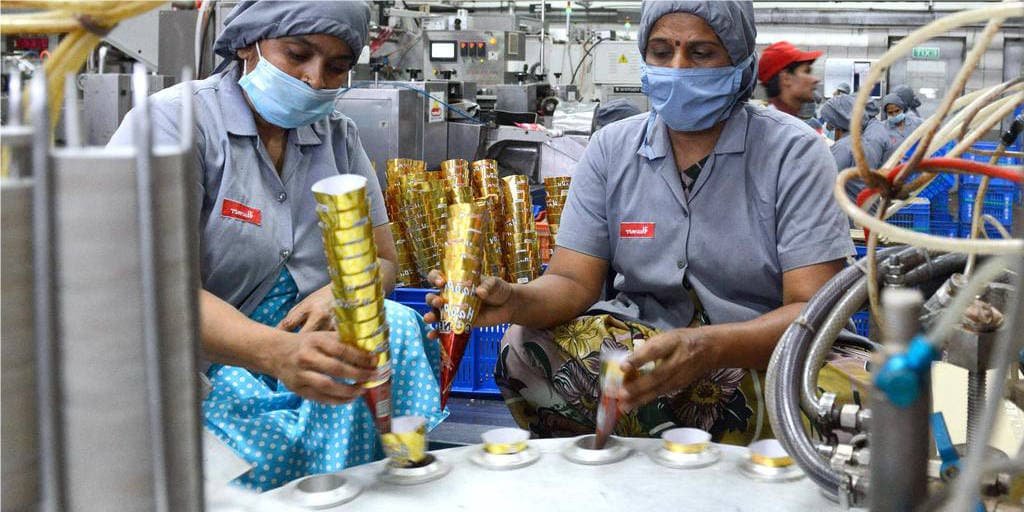
The technologies covered in this article are not developing in isolation. They are increasingly connected. Automation generates data that can feed inspection and quality systems. AI can support the modelling and optimisation of processes such as extrusion and freezing. Biosensors and X-ray inspection can work alongside automated production systems to provide more continuous monitoring.
For food manufacturers, the key challenge is deciding how these technologies can work together to address specific operational needs. Investment decisions should consider production requirements, product characteristics, food safety, workforce capabilities and the expected business value.
As new technologies and applications emerge, this article will continue to be updated. Bookmark this page and return regularly for new insights into the technologies shaping the future of food processing.
📌 Quick Reference: Explore the Article
| Topic | Resource |
| AI & Automation | Read guide |
| Top 10 Technologies | Read guide |
| Robots in Food Industry | Read guide |
| Cobots in F&B | Read guide |
| Food Extrusion | Read guide |
| Commercial Freezing & Cold Chain | Read guide |
| Filtration & Food Safety | Read guide |
| X-Ray Inspection | Read guide |
| Mettler-Toledo X3 Series | Read guide |
| High-Performing X-Ray Systems | Read guide |
| 3D Food Printing | Read guide |
| Biosensors | Read guide |
| Data-Driven Meat Processing | Read guide |
Conclusion
This pillar page is intended to work both as a standalone resource and as a navigational article for the wider food processing technology section. As new articles are added to each cluster, the relevant sections and internal links should be updated so that readers can move easily between related resources.
Maintaining these two-way internal links will also help build a stronger topic structure and make the content easier for search engines to discover and understand. I have also removed the final “Would you like me…” line from the source, since that reads as an editorial workflow note rather than content intended for publication. The original link destinations have been retained, including the Mettler-Toledo X3 and cobot pages.
💡 Food Processing Technology & Innovation Few FAQs
Key technologies include AI and automation, robotics and cobots, advanced processing techniques such as extrusion and commercial freezing, filtration, X-ray inspection, biosensors, 3D food printing, and data-driven processing systems.
AI and machine-learning systems are being used to support production planning, optimize production lines, analyse process data, and improve operational consistency. AI can also contribute to the refinement of processing techniques through data-driven modelling.
Robots can improve productivity, safety and consistency in food manufacturing, while collaborative robots, or cobots, enable closer human-machine collaboration on the factory floor.
Extrusion enables manufacturers to engineer texture, structure and nutritional profiles and is widely used in products ranging from breakfast cereals to plant-based proteins.
Commercial freezing is a major preservation method, but achieving consistent quality requires attention to the physical and biochemical changes during freezing as well as cold-chain requirements.
X-ray inspection provides non-destructive quality assurance at production-line speeds. It can help detect contaminants, verify fill levels and check package integrity.
3D food printing, biosensors and data-driven processing are among the emerging technologies highlighted in this guide. These technologies have potential applications in personalized nutrition, rapid quality monitoring, yield improvement, waste reduction and traceability.
Modern technologies are increasingly being connected rather than deployed independently. For example, automation can feed data into inspection systems, while AI can help refine extrusion and freezing processes, and biosensors and X-ray systems can work alongside robotics.

Have a news or topic to share with industry? Write to us editorial@pfionline.com