India’s ice cream market is booming, driven by rising incomes, changing lifestyles, abundant raw materials and improved cold-chain infrastructure. Despite low per capita consumption, the industry is growing rapidly. Explore top 10 ice cream brands in India, including Amul, Kwality Wall’s, Vadilal, Mother Dairy and Havmor, and discover their product portfolios, market presence and emerging industry trends.
India’s ice cream market is expanding as changing food habits, rising incomes, wider product availability and improved cold-chain infrastructure bring frozen desserts to more consumers. Once seen largely as a seasonal treat, ice cream is becoming a more regular purchase, with demand growing across cities, smaller towns and emerging retail channels.
The market is also becoming more competitive. Established dairy cooperatives, domestic manufacturers, multinational companies and regional brands are investing in new products, manufacturing capacity and distribution. Their portfolios range from affordable impulse products and family packs to premium tubs, artisanal flavours, kulfi and ice cream cakes.
According to Euromonitor International, India’s ice cream retail market was valued at approximately ₹20,234 crore in 2024. It grew by 14.5% in value over the previous year. The market is projected to reach around ₹21,903 crore in 2025 and ₹37,664 crore by 2030, based on the report’s estimates. These forecasts are in constant 2024 prices and should be read as market projections, not actual sales.
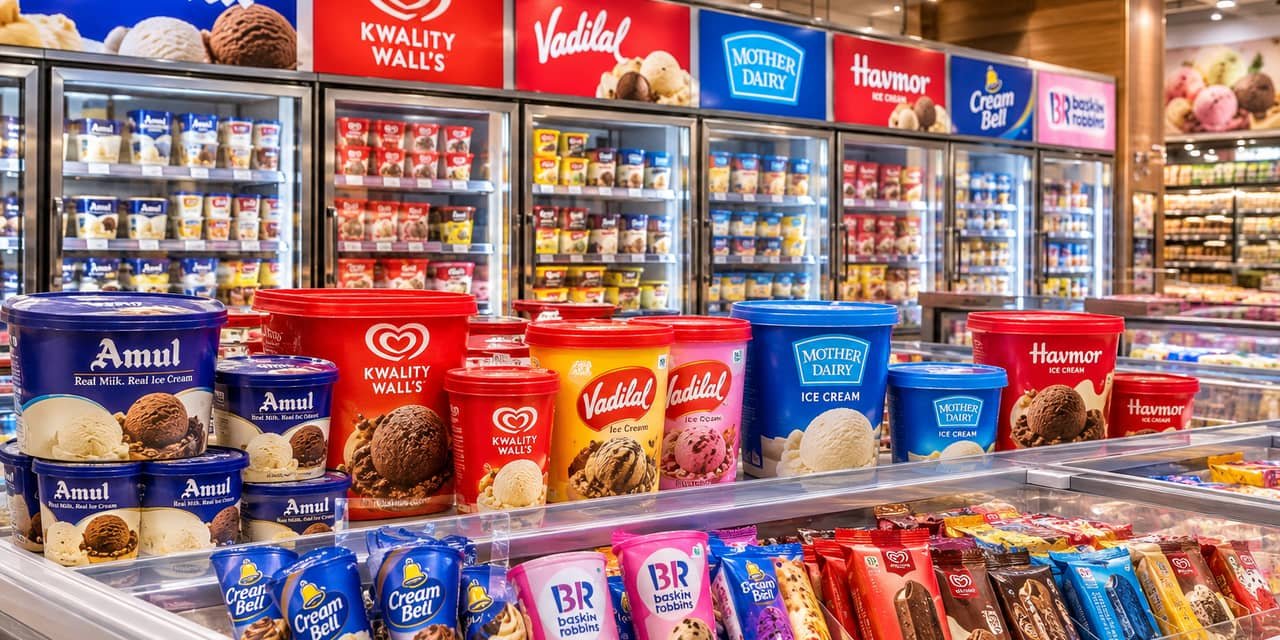
The competitive landscape remains fragmented. Amul is estimated to lead with around 19% of retail value share in 2026, followed by Kwality Wall’s India at about 9%. Other important players include Hatsun Agro Products, Mother Dairy, Devyani Food Industries, Vadilal Industries and Havmor Foods. Several regional brands also hold strong positions in their home markets. This article profiles ten established ice cream brands operating in India. The selection considers market presence, brand recognition, product range and distribution reach. It is not a ranking by sales or market share, as comparable brand-level financial data is not available for all players.
Trends Shaping India’s Ice Cream Market
A growing market with room for expansion
India has a large consumer base and a strong dairy production network, but per capita ice cream consumption remains relatively low. Euromonitor estimates consumption at around 0.5 litres per person in 2024. This leaves room for further growth as products become more accessible and consumption spreads beyond major cities.
The market is also moving beyond the traditional summer-led sales cycle. Wider availability of packaged products, improved refrigeration and more frequent consumption occasions are helping brands build demand throughout the year.
Impulse products remain important
Single-serve cups, cones, sticks and bars are major parts of the Indian market. They serve consumers looking for affordable, convenient products and are widely sold through neighbourhood shops, kiosks, parlours and modern retail outlets.
Euromonitor estimated that impulse products accounted for 60.8% of retail value in 2024. Take-home products, including family tubs and multipacks, are also growing, supported by supermarket sales, home delivery and quick-commerce platforms.
Premium products and new flavours
Consumers are showing interest in premium products, unusual flavour combinations and better-quality ingredients. Traditional Indian flavours such as Alphonso mango, kesar pista, paan and tender coconut are finding a place alongside chocolate, vanilla and fruit varieties.
Brands are also extending their portfolios into ice cream cakes, gourmet products, kulfi, thick shakes and other frozen desserts. This allows companies to serve different price points and consumption occasions.
Distribution and cold-chain investment
Ice cream requires a reliable temperature-controlled supply chain. Manufacturers depend on cold storage, refrigerated transport, freezers at retail outlets and careful handling to maintain product quality.
The expansion of organised retail, foodservice, quick commerce and dedicated ice cream parlours is increasing the need for dependable distribution. Companies with strong local networks and freezer infrastructure have an advantage, particularly in smaller cities and regional markets. Explore here the latest emerging trends in the ice cream industry.
| Also Read: Production Processing and Consumption of Ice Cream in India
| Also Read: Chilling Through Time: A Brief History of Ice Cream Brands in India
Most popular ice cream brands are regional, with many focusing on only one or two districts or, in some cases, only one state. Ice-cream, as a category, has been growing at a healthy CAGR of ~15-17%.
Here is a list of top 10 ice cream brands in India

Top 10 ice cream brands in India
Amul Ice Cream

Company: Gujarat Cooperative Milk Marketing Federation (GCMMF)
Origin: Anand, Gujarat
Business model: Dairy cooperative federation
Key products: Cups, cones, sticks, tubs, ice cream cakes, kulfi and speciality flavours
Amul is one of India’s largest and most recognised dairy brands. Its ice cream business draws strength from the extensive milk procurement and distribution network of the Gujarat Cooperative Milk Marketing Federation (GCMMF).
Amul entered the ice cream market in 1996 and has since built a broad portfolio across price segments. Its range includes traditional flavours, chocolate-based products, fruit varieties, cones, cups, family packs and kulfi. The brand also offers speciality products such as camel milk ice cream.
Its extensive retail presence and relatively affordable products have helped Amul reach consumers across urban and smaller markets. The brand benefits from its wider dairy portfolio and established distribution network, which support the availability of chilled products through a large number of retail outlets.
Euromonitor estimates that GCMMF holds around 19% of India’s ice cream retail value share in 2026, placing it at the top of the market. This figure relates to the company’s ice cream market position, not its total dairy turnover..
Kwality Walls (Kwality Ice Cream)

Company: Kwality Wall’s (India) Ltd.
Business: Ice cream and frozen dessert products
Key brands: Kwality Wall’s, Cornetto, Magnum, Feast and Creamy Delight
Key products: Cones, tubs, sticks, bars, cups and premium ice cream products
Kwality Wall’s — an icecbream brand with the heart logo — has a long-standing presence in India. Its portfolio includes products across mass-market and premium segments, with brands such as Cornetto and Magnum serving distinct consumer groups.
A major change took place in 2025 when Hindustan Unilever’s ice cream business was demerged into Kwality Wall’s (India) Limited. The demerger became effective on 1 December 2025, and the company was listed on the BSE and NSE on 16 February 2026.
The separation created a dedicated listed business for the ice cream portfolio, giving it a management and operating structure focused on the category. Its brands cover impulse products, family packs and premium offerings, supported by a wide retail network.
Euromonitor estimates Kwality Wall’s India at around 9% of the Indian ice cream market by retail value in 2026. The company’s performance and future growth will depend on brand investment, product development, distribution and its ability to compete across price segments.
Vadilal Ice Creams

Company: Vadilal Industries Ltd.
Headquarters: Ahmedabad, Gujarat
Business: Ice cream, frozen desserts and processed foods
Key products: Ice cream tubs, cones, cups, sticks, kulfi, ice cream cakes and speciality ranges
Vadilal is one of India’s established ice cream manufacturers, with a history dating back to the early twentieth century. The brand began as an ice cream parlour in Ahmedabad and grew into a large manufacturing and distribution business. Vadilal Group is among the very few companies which mainly focus on its Ice creams and candies.
Its product portfolio includes traditional flavours, fruit-based varieties, cones, cups, sticks, kulfi and family packs. The company has also developed speciality ranges and products aimed at younger consumers. Its extensive flavour selection is one of its key brand features.
Vadilal operates dedicated ice cream manufacturing facilities at Pundhra in Gujarat and Bareilly in Uttar Pradesh. The company also has a presence in processed foods, including frozen fruits and vegetables, and exports products to international markets.
Its manufacturing base and distribution reach support its presence across several parts of India. The brand has a particularly strong association with western India, while its production and marketing network serves a wider domestic market. For the food processing sector, Vadilal is notable for its combination of ice cream manufacturing, frozen food operations and export activity.
| Also Read: Top 10 Ice Cream Brands in USA: The Ultimate Guide for Ice Cream Lovers
| Also Read: A Scoop Through Time: The Rich History of Ice Cream Brands in USA
Mother Dairy Ice Cream

Company: Mother Dairy Fruit & Vegetable Pvt. Ltd.
Established: 1974
Parent organisation: National Dairy Development Board (NDDB)
Key products: Cups, cones, sticks, tubs, kulfi and speciality ice cream products
Mother Dairy is a major dairy and food company with a strong presence in northern India. Established in 1974 under the Operation Flood programme, it has built a broad consumer business covering milk, dairy products, ice cream, fruits and vegetables.
Its ice cream range includes traditional flavours, chocolate products, cones, cups, sticks and family packs. The brand has also developed products for consumers seeking convenient, ready-to-eat desserts.
Mother Dairy benefits from its established dairy procurement and distribution network. Its presence in Delhi-NCR and other markets gives it access to a large consumer base, while its retail and institutional channels support product availability.
The company reported a turnover of ₹17,386 crore in FY 2024-25. This is the company’s overall turnover and includes its wider dairy and food business. It should not be interpreted as ice cream revenue. Mother Dairy’s strength lies in its established brand, distribution network and ability to offer ice cream alongside a broad range of dairy products.
Arun Ice Cream

Company: Hatsun Agro Product Ltd.
Headquarters: Chennai, Tamil Nadu
Key brands: Arun Icecreams and ibaco
Key products: Cones, cups, sticks, kulfi, ice cream cakes, tubs and premium flavours
Arun Icecreams is a leading Indian ice cream brand owned by Hatsun Agro Product Ltd. It has built a strong presence in southern India through a combination of retail outlets, distributors and a wide range of packaged products.
The brand’s growth has been supported by its focus on markets beyond major cities. Its distribution model includes dedicated ice cream parlours and retail outlets, helping it reach consumers in towns and smaller urban centres.
Arun offers traditional flavours such as vanilla, strawberry, mango, butterscotch and pista, along with seasonal and speciality products. Its portfolio also includes kulfi, ice cream cakes and other frozen treats.
Hatsun operates ibaco as a premium ice cream retail brand. The format offers a wider range of flavours and toppings, catering to consumers looking for a different store-based experience.
According to Hatsun Agro’s FY 2024–25 annual report, Arun Icecreams and Hatsun dairy products were distributed through more than 794 HAP Daily I Plus stores. The company also reported over 219 ibaco premium outlets. These networks support the group’s presence across southern and other Indian markets.
| Also Read: Opportunities for Ice Cream Industry in India
| Also Read: Preparation of Herbal Ice Cream Using Phyllanthus Niruri
Creambell Ice Cream

Company: Devyani Food Industries Ltd.
Business: Ice cream and dairy products
Key products: Cones, cups, sticks, tubs, family packs and speciality flavours
Creambell is an Indian ice cream brand with a presence across several states. It has developed a product range covering traditional flavours, chocolate-based products, fruit varieties, cones, cups and family packs.
The brand has focused on product variety and distribution expansion. Its portfolio serves different consumer groups, from affordable impulse products to larger packs for household consumption.
Creambell is associated with Devyani Food Industries, part of the RJ Corp business group. The company has developed its presence through retail distribution and a network of outlets across multiple markets. Competition in the Indian ice cream industry is intense, particularly in impulse products and affordable family packs. Creambell’s ability to maintain product quality, expand retail availability and introduce relevant flavours will be important to its continued growth.
Havmor (Lotte) Ice Cream

Company: Havmor Foods Pvt. Ltd.
Parent group: Lotte Wellfood, South Korea
Origin: 1944
Key products: Cones, cups, sticks, tubs, kulfi, ice cream cakes and speciality products
Havmor is one of India’s established ice cream brands, with roots dating back to 1944. It began in the Indian subcontinent and later developed a strong presence in Gujarat and other western markets.
The brand became part of South Korea’s Lotte group following its acquisition in 2017. The investment has supported expansion in manufacturing, technology and distribution.
Havmor offers a broad product range, including cones, cups, sticks, tubs, kulfi and ice cream cakes. Its portfolio covers both everyday products and premium offerings. The company has also introduced new formats and flavours to appeal to changing consumer preferences.
A major investment in manufacturing came with the inauguration of Lotte’s new ice cream facility in Pune in February 2025. The plant has an annual production capacity of 50 million litres. The investment is part of the group’s plan to expand its manufacturing and supply-chain presence in India. Havmor’s established regional identity, combined with Lotte’s manufacturing and technology resources, gives it a strong position in the competitive Indian market.
ALSO READ…
- Top 10 Ice Cream Brands in India: Leading Players and Market Trends (2026)
- Top 10 Dairy Companies in India (2026): Leading Brands
- Food Traceability: Why Processors Need a Human Exception Drill
- Food Safety in Bakery Industry: A Complete FSSAI Compliance Guide
- Cibus Tec 2026 Attracts Over 40,000 Visitors from 120 Countries
Baskin Robbins

Global brand: Baskin-Robbins
Origin: United States, 1945
Indian market entry: 1993
Key products: Premium ice cream, tubs, cones, sundaes, ice cream cakes and desserts
Baskin-Robbins is an international ice cream brand known for its wide flavour range and parlour-based retail model. Founded in the United States in 1945, the company entered India in 1993 and has since built a presence in major cities and other urban markets.
Its portfolio includes classic flavours, seasonal offerings, premium tubs, sundaes, cones, ice cream cakes and other desserts. The brand’s store format allows consumers to sample flavours and choose from a wider range than is generally available through packaged retail alone.
In India, Baskin-Robbins operates through a franchise-led network. The company’s Indian website reports a presence in more than 200 cities, with over 750 exclusive stores. Its positioning is generally more premium than that of mass-market packaged ice cream brands. The brand’s strength lies in its international identity, flavour variety and dedicated parlour experience. Its expansion also reflects the growing demand for premium desserts and organised ice cream retail in India.
Dinshaw’s

Company: Dinshaw’s Dairy Foods Pvt. Ltd.
Established: 1932
Headquarters: Nagpur, Maharashtra
Key products: Ice cream, kulfi, dairy products and frozen desserts
Dinshaw’s is one of India’s long-established regional ice cream brands. Founded in Nagpur in 1932 by brothers Dinshaw and Erachshaw Rana, the company has built a strong identity in central and western India.
The brand’s portfolio includes traditional and contemporary ice cream flavours, kulfi and other dairy-based products. Its range caters to both household consumption and retail outlets.
Dinshaw’s has expanded beyond its original market and serves consumers in several states. Its regional strength and long-standing customer base have helped it compete with larger national brands. The company continues to build its brand around product quality, flavour development and distribution. Its history also reflects the role of regional manufacturers in shaping India’s organised ice cream industry.
Top’N Town

Company: Ramani Ice Cream Company Ltd.
Headquarters: Bhopal, Madhya Pradesh
Business: Ice cream manufacturing and retail
Key products: Cups, cones, tubs, kulfi, bars, sandwiches, sundaes and ice cream cakes
Top ’N Town is an established ice cream brand from central India. The brand has been operating for close to five decades and has developed a strong presence in Madhya Pradesh and neighbouring markets.
Its portfolio includes conventional flavours as well as a range of product formats. These include premium cups, cones, tubs, kulfi, bars, sandwiches, sundaes and ice cream cakes. The company has also introduced products such as zero-added-sugar ice cream.
Top ’N Town operates through a network of retail outlets, distributors and exclusive parlours. Its regional reach and local market knowledge have helped it build a consumer base in central India. The brand’s growth illustrates the importance of regional manufacturers in a market where consumer preferences, distribution costs and local retail relationships can differ widely from one state to another.
| Also Read: Scoop into the Future: Emerging Trends in Ice Cream Industry
| Also Read: Sustainable Scoops: Ice Cream Companies and Environmental Challenges
What Drives Competition in India’s Ice Cream Industry?
The Indian ice cream market includes national brands, regional manufacturers and local producers. Competition is shaped by product pricing, flavour innovation, retail availability, cold-chain infrastructure and brand positioning.
Large companies benefit from manufacturing scale and broad distribution networks. Regional brands often have a strong understanding of local tastes and established relationships with retailers. Both play an important role in serving India’s varied consumer base.
The market is also seeing greater product segmentation. Affordable impulse products remain important, while premium tubs, gourmet flavours, ice cream cakes and parlour-based experiences are attracting consumers in urban markets. Traditional Indian flavours continue to offer opportunities for product differentiation.
For manufacturers, distribution remains a major operating challenge. Ice cream requires uninterrupted temperature control from the factory to the point of sale. Investment in cold storage, refrigerated transport, retail freezers and inventory management is essential to maintain product quality and reduce losses.
Future Outlook
India’s ice cream industry is expected to benefit from rising consumer spending, wider retail access and the spread of cold-chain infrastructure. The category is also gaining from changing consumption habits, with consumers buying ice cream more often and across a wider range of occasions.
Product innovation will remain a key area of competition. Brands are likely to expand their portfolios through regional flavours, premium products, new formats and products aimed at specific consumer groups. There is also scope for growth in low-sugar and plant-based frozen desserts, although these remain distinct product segments and should not be treated as conventional dairy ice cream.
Manufacturing and supply-chain investment will be equally important. Companies need efficient freezing systems, hygienic production lines, reliable packaging and temperature-controlled distribution. Better retail freezer networks can also help improve product availability in smaller markets.
The market is unlikely to be dominated by a handful of brands alone. Regional companies and emerging players will continue to compete through local flavours, pricing and focused distribution. For established brands, the challenge will be to balance scale with product quality, innovation and efficient operations.
With a large consumer base and considerable room for higher per capita consumption, India’s ice cream industry offers opportunities for both established manufacturers and new entrants.
Frequently Asked Questions – Ice Cream Brands in India
Amul is the leading company in India’s ice cream market by estimated retail value share. Euromonitor’s 2026 assessment puts GCMMF’s share at around 19%. Market shares can vary by source, product category and measurement period.
Popular ice cream brands in India include Amul, Kwality Wall’s, Vadilal, Mother Dairy, Arun, Creambell, Havmor, Baskin Robbins, Dinshaw’s, and Top’n Town.
Vadilal is known for offering over 200 flavors, making it one of the most diverse ice cream brands in India in terms of flavor variety.
No, Baskin Robbins is a global ice cream brand headquartered in the United States. In India, it operates through franchising and provides a premium experience.
Growth is supported by rising incomes, changing food habits, wider product availability, new flavours, organised retail, quick commerce and investment in cold-chain infrastructure. Low per capita consumption also leaves room for market expansion.
‘Processed Food Industry’: The Voice of Food Processing Industry
Processed Food Industry (PFI) is a leading monthly B2B magazine (ISSN 09721649) published from New Delhi, serving the food processing sector since 1997. With over 27 years of continuous publishing, PFI has built a trusted reputation as a reliable source of industry insights.
For companies aiming to tap into the fast-growing Indian and South Asian markets, PFI offers a strategic platform across print, web, and social media to build strong brand visibility. Supported by experienced technical writers, we help craft impactful content that connects with your customers and drives results.
As India’s food industry rapidly expands through innovation and efficiency, now is the time to position your brand at the forefront. Request our media kit to fine-tune your marketing strategy, increase your visibility, and convert potential customers into valuable conversations. Additionally, ask for a sample copy of our monthly magazine and experience the quality and relevance we deliver.
Let us help you define your role in the future of the food processing industry.

Have a news or topic to share with industry? Write to us editorial@pfionline.com