Food labels are more than marketing – they are legal and scientific declarations. Nilesh Amritkar explains FSSAI’s food claims and labelling regulations, mandatory declarations, nutrition and health claims, laboratory testing requirements, and emerging front-of-pack labelling norms to help FBOs build compliant and trusted brands.
A food label is the smallest, most heavily regulated piece of real estate your brand will ever own. In a few square centimetres, it has to be a marketing pitch, a legal declaration, a nutrition statement, and a safety notice – all at once, and all true.
For a growing Food Business Operator (FBO) or a first-time founder, this is where ambition meets the rulebook. You want to say ‘high in protein,’ ‘no added sugar,’ ‘made with real fruit,’ ‘good for immunity.’ The regulator wants to know one thing in return: can you prove it?
That single question is the spine of this guide. Because the claims you make and the label you print are not creative decisions – they are evidentiary ones. And the evidence is generated in a laboratory.
The two rulebooks you are actually operating under
Most founders think of ‘FSSAI compliance’ as one monolithic thing. In practice, your label lives at the intersection of two distinct regulations, and it helps to keep them separate in your head.
1. The Food Safety and Standards (Labelling and Display) Regulations, 2020 govern what you must declare – the mandatory information every pack has to carry. Think of this as the non-negotiable foundation.
2. The Food Safety and Standards (Advertising and Claims) Regulations, 2018 (amended in 2022, effective March 2023) govern what you may say beyond the mandatory minimum – your nutrition claims, health claims, and the adjectives you reach for. Think of this as the discretionary layer, where the marketing happens.
3. A useful mental model: the Labelling regulation is the tax return you are legally required to file; the Claims regulation is the elevator pitch you are allowed to make – provided every line is backed by a receipt. Both sit under the parent Food Safety and Standards Act, 2006, which provides the enforcement powers.
Decoding claims: what you can say, and what it costs to say it
The Claims regulation is built on one governing principle, repeated in different forms throughout: a claim must be truthful, unambiguous, meaningful, not misleading, and scientifically substantiated. Everything else is detail.
The claims you are most likely to want fall into a few categories:
Nutrient content claims
These describe how much of a nutrient your product contains – ‘source of protein,’ ‘high in fibre,’ ‘low fat,’ ‘sugar-free.’ Each of these is a defined threshold in Schedule I, not a marketing phrase. You don’t get to decide what ‘high’ or ‘low’ means – the regulation does.
As a rule of thumb, a ‘sugar-free’ claim generally requires that the product contain no more than 0.5 g of sugar per 100 g (or 100 ml). ‘Source of’ and ‘high in’ carry minimum quantities tied to the Recommended Dietary Allowance; ‘low’ and ‘free’ carry ceilings. Before you print the word, you must know your number – and your number comes from analysis.
Nutrient comparative claims
These are relative – ‘reduced fat,’ ‘lite,’ ‘25% less sodium,’ ‘more fibre.’ A comparative claim is only permitted when the difference from a reference food is meaningful — broadly, around a quarter less or more for macronutrients – and when you can name the reference product you are comparing against. ‘Lite’ with nothing to be lighter than is a non-starter.
Non-addition claims
‘No added sugar,’ ‘no added salt.’ These are among the most deceptively risky claims a brand can make. To begin with, ‘no added sugar’ does not mean ‘low sugar.’ And a fruit juice generally cannot honestly carry a bald ‘no added sugar’ claim at all. Most commercial juices are extended with concentrated juice, sugarcane juice, or fructose – all of which the regulation treats as added sugars – so a mango juice that lists sugarcane juice among its main ingredients has, by definition, added sugar.
Even where the sugars are purely natural, FSSAI requires the pack to declare ‘CONTAINS NATURALLY OCCURRING SUGARS,’ so the claim can never stand alone on a sweet product, and a claim that lets a consumer assume the product is low in sugar is treated as misleading. FSSAI has recently issued show-cause notices to several beverage brands on exactly this point. A non-addition claim is about your ingredient list, not your nutrition panel – and the two must never contradict each other in a way that misleads the consumer.
Health claims
This is where founders most often overreach. The regulation distinguishes between:
- Function claims – ‘calcium supports bone health’ – describing a nutrient’s normal physiological role.
- Disease risk reduction claims – implying a food reduces the risk of a disease.
Function claims must still be substantiated, but disease risk reduction claims and any novel claim not already standardised require prior approval from FSSAI. And there is a hard line you cannot cross: no food product may claim to prevent, treat, or cure any disease. The moment your packaging says that, you have stopped selling a food and started selling an unlicensed drug. ‘Boosts immunity’ is especially risky for exactly this reason – handle it as a function claim with evidence, never as a medical promise.
The adjectives with strings attached
‘Natural’, ‘fresh’, ‘pure’, ‘original’, ‘traditional’, ‘authentic’, ‘real’, ‘premium’ – every one of these is conditioned in the regulation. ‘Natural’ cannot be used for anything that has undergone more than minimal processing. And the regulator has explicitly clamped down on superlatives: ‘100% pure,’ ‘100% natural,’ ‘100% safe’ are not allowed unless you can substantiate them unequivocally – which, for ‘100% safe,’ you essentially never can.
Who carries the burden – and what it costs to be wrong
Founders underestimate this: The burden of proof sits entirely with you. A Licensing or Designated Officer can call upon you at any time to produce the scientific evidence behind any claim. FSSAI runs an Advertising Monitoring Committee that actively scans e-commerce listings and social media, and it has a memorandum of understanding with the Advertising Standards Council of India (ASCI) to flag misleading food advertisements.
If you cannot substantiate a claim – or if it is found misleading – the penalty under Section 53 of the Act runs up to 10 lakh, alongside possible suspension or cancellation of your licence and forced product recall. For a bootstrapped brand, the recall and the delisting hurt far more than the fine.
The Labelling and Display Regulations, 2020 require a set of declarations on every pre-packaged food. It has to be a marketing pitch, a legal declaration, a nutrition
statement, and a safety notice.
Getting the label right: the mandatory foundation
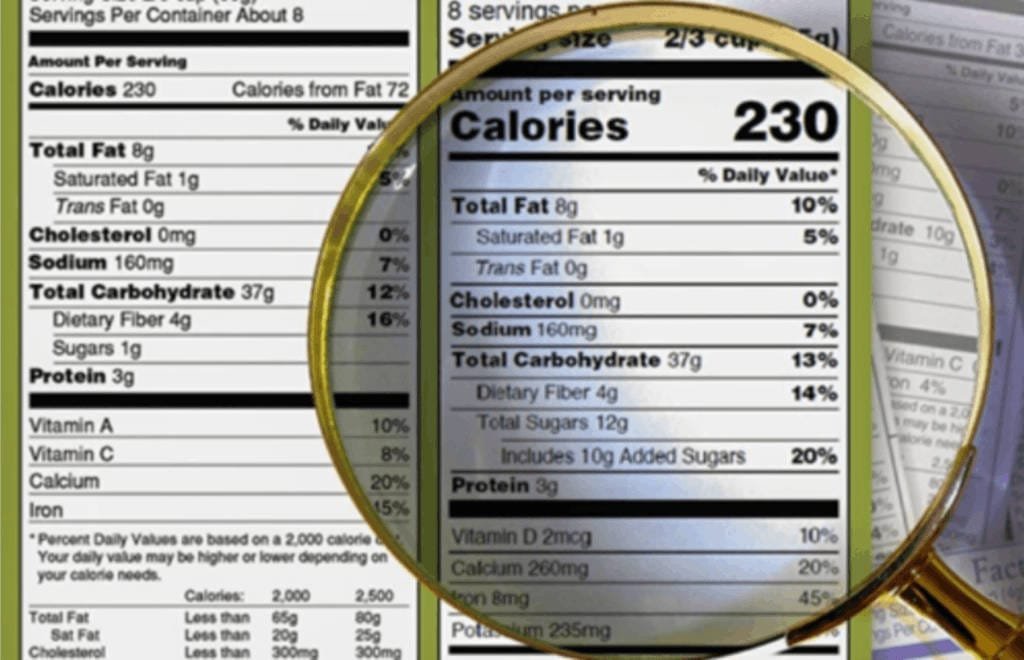
Before any claim, the Labelling and Display Regulations, 2020 require a set of declarations on every pre-packaged food. Treat the list below as a pre-flight checklist – a single missing element can hold up a consignment or trigger a notice.
- Name of the food and, where applicable, its category or standardised name
- List of ingredients in descending order of weight at the time of manufacture
- Nutritional information – energy, protein, carbohydrate (including total sugars), fat (including saturated fat), and sodium, declared per 100 g/ml and per serving, with % contribution to RDA
- Veg / Non-veg declaration – the green dot in a green square, or the brown dot in a brown square
- Declaration of food additives by class name and INS number
- Allergen information – clear declaration of the major allergen groups recognised by FSSAI (such as cereals containing gluten, milk, egg, fish, crustacean, tree nuts, peanuts, soy, and added sulphites); and where you make a free-from claim, a lab report evidencing absence to support it
- Name and complete address of the manufacturer / packer / importer
- FSSAI logo and licence number
- Net quantity, and where relevant, drained weight
- Lot / batch / code number for traceability
- Date marking – date of manufacture or packing, and ‘best before’ / ‘use by’ / ‘expiry’ as applicable
- Country of origin for imported foods
- Instructions for use and storage where the food requires them
The most common startup mistakes are mundane and entirely avoidable: a nutrition panel copied from a similar product rather than tested on your own formulation; an allergen omitted because it was a minor processing-aid ingredient; a ‘best before’ date assigned by gut feel rather than a shelf-life study; ingredients listed alphabetically instead of by weight. None of these survive two basic safeguards: a valid lab test report from an FSSAI-notified, NABL-accredited laboratory – the only thing that makes your nutrition panel and shelf-life date defensible in the first place – and a structured review of the label against the regulations. The numbers come from the lab; the review catches the rest.
The horizon: Front-of-Pack Labelling is coming – prepare now
If there is one regulatory shift worth watching closely, it is Front-of-Pack Labelling (FOPL).
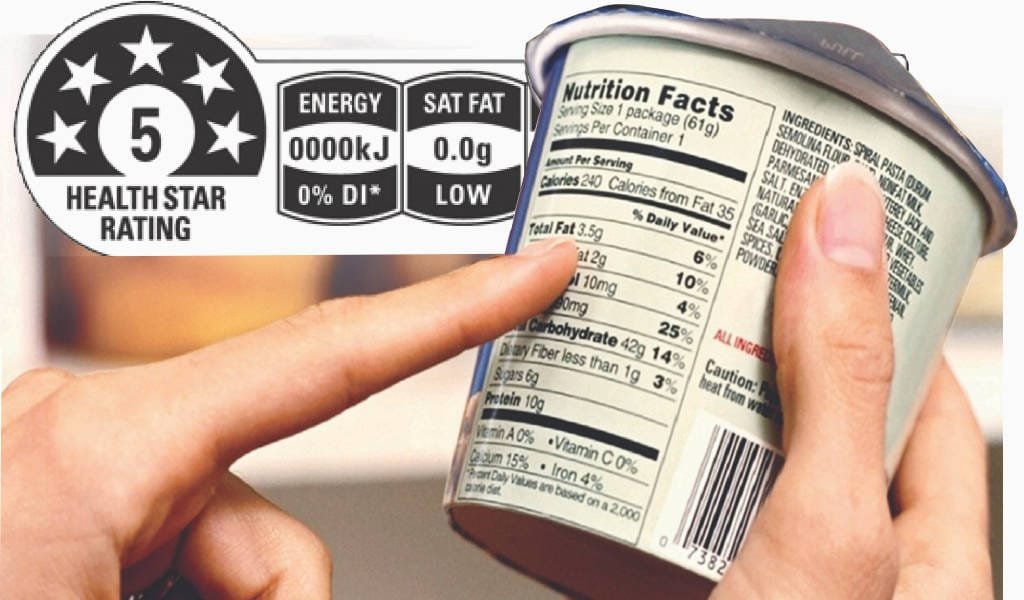
The journey has been long. FSSAI’s 2022 draft proposed the Indian Nutrition Rating (INR) – a half-star to five-star ‘health star’ system displayed near the product name. After more than 14,000 stakeholder representations, a Committee of Scientists concluded the star model was unfit for finalisation in its current form and recommended reconsideration. The matter has since moved into the courts: the Supreme Court, hearing public-interest litigation on the right to health, directed the government to finalise FOPL norms, and as recently as February 2026 urged FSSAI to consider warning labels for products high in sugar, sodium, and saturated fat, paired with a positive logo for healthier products.
Meanwhile, draft amendments to the Labelling regulations have proposed displaying the per-serve % RDA contribution of added sugar, saturated fat, and sodium in bold, larger fonts on the front panel.
The exact final form is not yet settled. But the direction of travel is unmistakable: the most sensitive numbers on your pack – sugar, salt, fat – are about to become the most visible. Brands that already test these accurately and formulate with them in mind will adapt overnight. Brands that have been guessing will face reformulation under deadline pressure. The cheapest time to get your numbers right is before they are forced to the front of the box.
FSSAI’s 2022 draft proposed the Indian Nutrition Rating (INR) — a half-star to five-star ‘health star’ system displayed near the product name.
The thread running through all of it: your trusted Food Testing Laboratory
Reread everything above and one pattern emerges. The nutrition panel is a set of measurements. ‘High in protein’ is a measurement against a threshold. ‘Sugar-free’ is a measurement against a ceiling. ‘Gluten-free’ is a measurement against a detection limit. The shelf life on your pack is the output of a stability study. Even ‘no added sugar’ has to be reconciled against a tested sugar figure so it doesn’t mislead.
Every claim is a hypothesis. Every label figure is a measurement. The laboratory is where a hypothesis becomes a defensible fact.
Allergens deserve a special mention, because they cut both ways. Declaring an allergen you have – milk, soy, peanut, a gluten-bearing cereal – is a matter of reading your own recipe honestly. Claiming an allergen you don’t have – ‘gluten-free’, ‘allergen-free’, ‘no traces of nuts’ – is a different order of responsibility. A ‘gluten-free’ claim, for instance, requires the product to test at or below a defined low threshold for gluten – it has to be measured. This is why prudent brand owners don’t merely declare the absence of an allergen – they hold a test report from an FSSAI-notified, NABL-accredited laboratory as documented proof of absence, ready to produce the moment a regulator, a retailer, or an allergic consumer asks.
A free-from claim you cannot back with analytical data is not a claim; it is a liability. The same discipline runs in the other direction, to cross-contamination: where shared equipment or lines create a risk of allergen cross-contact, a precautionary ‘may contain’ statement should rest on validation – allergen swabbing and finished-product testing that confirm whether the risk is real – not on a blanket disclaimer.
This is not optional, and it is not only for the launch. Under Condition of Licence No. 12 of the Licensing and Registration Regulations, manufacturers are required to get their products tested for relevant chemical and microbiological parameters at least once every six months, and since the FSSAI order of January 2023, those reports must be uploaded to the Food Safety Compliance System (FoSCoS). Testing is therefore both a one-time gate for your claims and a recurring obligation for your licence.
But not all testing is equal in the eyes of the law. For results to be credible – and admissible if you are ever questioned – they need to come from a laboratory that is:
- NABL-accredited to ISO/IEC 17025:2017, the international standard for testing competence
- FSSAI-notified under Section 43 of the Act, so its reports carry regulatory weight using the FSSAI Manual of Methods of Analysis – the prescribed, validated methods, not improvised ones issuing reports in the prescribed format, carrying the NABL symbol for tests within its accredited scope (a requirement FSSAI reinforced in late 2024)
A test report from such a lab is more than a number – it is the receipt that backs your pitch when an officer asks for proof.
The reframe that matters for a cost-conscious founder: a testing lab is not a cost centre or a compliance tax. It is the cheapest insurance you will ever buy, and increasingly, a moat. A 15,000-40,000 characterisation panel done before you print packaging protects you from a 10 lakh penalty, a recall that wipes out a season’s inventory, an e-commerce delisting that cuts your revenue overnight, and the reputational damage that no startup recovers from cleanly. The lab is where you de-risk the boldest thing on your label.
A practical discipline every FBO needs to follow: test before you claim, test before you print.
ALSO READ: 14 Things Every Packaged Food Item Must Have – Mandatory Label Checklist.
A practical playbook: from formulation to shelf
For an FBO or startup, the sequence below turns all of this into a repeatable workflow rather than a last-minute scramble.
- Formulate, then characterise. Once your recipe is locked, send the actual product for a baseline analysis — full proximate panel plus any parameter relevant to a claim you are considering. Do this before designing the pack. This gives you an accurate baseline.
- Decide claims against your real numbers. Map your tested values to the thresholds in the FSSAI regulations. Let the lab data guide you on which claims are possible. Resist the ‘marketing’ temptation to print anything that is not allowed by FSSAI.
- Design label and claims together. Build the mandatory declarations and the marketing claims as one coherent artifact, checking that the nutrition panel and any non-addition or comparative claim do not contradict each other.
- Validate before you commit. Run a verification check on the final formulation and put the label through a structured review against both the 2020 and 2018 regulations. This is the step that catches the alphabetical ingredient list and the missing allergen.
- Establish shelf life with a study, not a guess. Your ‘best before’ date should be the output of a stability protocol designed as part of the shelf-life studies undertaken in the lab – whether accelerated shelf-life testing or real-time shelf-life data.
- Launch – then re-test on schedule. Honour the six-monthly testing obligation, upload to FoSCoS, and treat any reformulation, new supplier, or process change as a trigger to re-test and re-review the label. Claims drift when ingredients change silently.
The devil’s advocate: ‘Isn’t this overkill for a small startup?’
It is fair to push back, and most founders do. The worry is familiar: testing is expensive, it takes too long, and a good lab isn’t available near me. When cash is tight and the launch date is close, that worry feels real – but, frankly, much of it does not hold up.
Think of a good food testing laboratory the way you would a family doctor: a trusted partner who knows your product, helps you stay well, and catches a problem early, while it is still small and cheap to fix. FSSAI-notified, NABL-accredited labs are spread across the country, turnaround is reasonable, and the cost is modest – especially when testing is preventive rather than damage-control.
And the cost itself deserves a straight answer: spread a single test report across every unit you produce and sell, and a bill that looked large becomes just paise per pack. Quality and brand-building have always carried a cost, and this is among the cheapest a food brand will ever pay for its own credibility.
The real expense is the one you defer. The six-monthly testing requirement applies to you regardless of size – being small is not an exemption, only a reason the penalty would hurt more – and increasingly, marketplaces and serious investors ask for test reports before they will list you or back you. Skip the test today and the cost does not disappear; it waits and multiplies, returning many times larger the day a regulator issues a notice or a consumer complains. A recall or a damaged reputation costs far more than any test ever would.
The honest conclusion is not ‘test everything, always, at maximum cost.’ It is test what you claim, test what the licence requires, and treat the lab as a partner who tells you the truth early – when it is still cheap to act on.
The bigger picture: compliance is how trusted brands are built
It is easy to read a guide like this as a long list of rules to be feared. It is anything but. Every claim threshold, every label declaration, every test report exists for one simple reason — so that the person buying your product can trust what the pack tells them. And trust, once earned, is the most durable advantage a food brand will ever have.
So treat claims and labelling not as a hurdle on the way to market, but as the foundation you build the brand on. Get the science right, say only what you can prove, and let an FSSAI-notified, NABL-accredited laboratory stand quietly behind every number. You do not have to do any of this alone — a good lab is a partner in exactly this work, helping you launch with confidence today and stay compliant as you grow.
There is a bigger story here too, and you are part of it. ‘Made in India’ is only complete when it is also ‘Tested in India’ – when what we make, we can also stand behind with data the world will respect. Every FBO and every food startup that chooses to get this right strengthens that reputation a little more.
So make your claim, and make it boldly – then make sure it is one you can keep. That is how great food brands are built, one honest label at a time. And it is well within your reach.
The author is Managing Director, Envirocare Labs, a FSSAI-notified, NABL-accredited testing laboratory serving the food, environmental, and pharmaceutical sectors.
Disclaimer: This guide is for general awareness and does not constitute legal advice. Always verify specific claim thresholds against the current text of the relevant FSSAI regulations and their latest amendments.

Have a news or topic to share with industry? Write to us editorial@pfionline.com