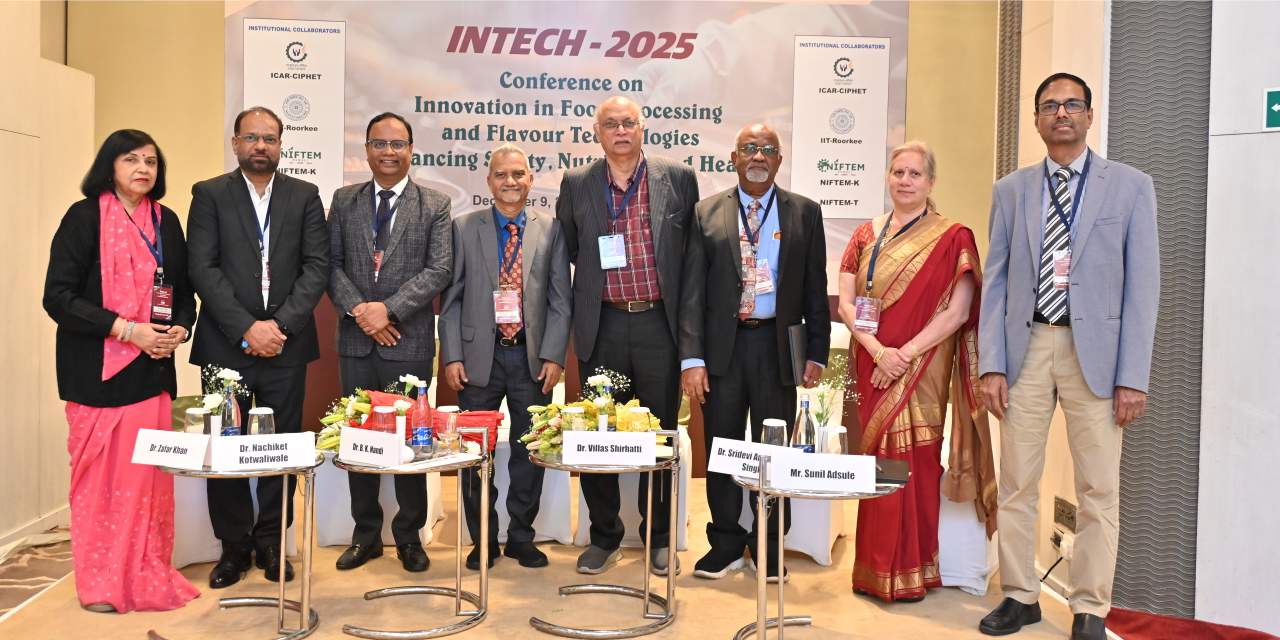
INTECH 2025, organized by ILSI India, brought together leading experts to discuss innovations in food processing and flavour technologies that enhance nutrition, safety, and sustainability.
Food processing lies at the core of modern food systems, playing a vital role in ensuring food safety, quality, affordability, and nutritional adequacy for a growing global population. It significantly enhances food availability, convenience, and shelf life. Recent advances in food technologies have successfully addressed many challenges associated with traditional processing methods, including nutrient loss, degradation of bioactive compounds, and reduced dietary fibre content.
Modern food processing technologies can be effectively leveraged to develop healthier and more functional foods by improving digestibility, bioavailability, and overall nutrient quality without compromising taste or consumer appeal. These technologies also help overcome issues related to nutrient retention, anti-nutritional factors, and food safety. In addition, research in the neuroscience of taste, combined with innovations in ingredient and food additive development, offers promising opportunities to reshape flavour perception. Such approaches can support the reduction of salt, sugar, and fat intake, thereby encouraging healthier dietary choices.
Integrating traditional Indian knowledge systems with modern food processing innovations presents further opportunities for industrial application and sustainable food development.
The food processing industry is closely linked to agriculture, as it relies on agricultural produce as raw material. This linkage not only generates additional income for farmers but also helps reduce post-harvest losses and creates employment opportunities. While approximately 41% of fruits and vegetables produced in the United States are processed, only about 2% are processed in India, despite India being the world’s second-largest producer of fruits and vegetables. Overall, only around 10% of India’s agricultural produce is processed. Studies indicate post-harvest losses ranging from 6.02% to 15.05% in fruits and 4.82% to 11.61% in vegetables (Jha et al., 2015). A significant portion of these losses can be mitigated through expanded food-processing activities, delivering benefits to both producers and consumers.
The Indian food processing sector is projected to reach a turnover of USD 535 billion by 2025-26. Although the sector is currently growing at approximately 11%, faster growth could substantially increase its contribution to the economy. The potential is immense, positioning India to serve both domestic markets and emerge as a major global supplier of value-added food products.
Innovations in food processing are expected to make a significant contribution to public health and stand out as key achievements in the scientific arena. ILSI India takes pride in these advancements and extends its best wishes to researchers and innovators for their future endeavours.
These themes, along with several related aspects of food processing, were highlighted by a distinguished panel of experts at the ILSI India–sponsored INTECH 2025 Conference on “Innovations in Food Processing and Flavour Technologies: Advancing Safety, Nutrition and Health.” The conference was held on December 9, 2025, in New Delhi, alongside the ILSI India Annual Meeting.
Key takeaways from the conference included:
- A clear shift from basic preservation methods to advanced, science-driven systems supporting food security and sustainability.
- Knowledge exchange on developing affordable, high-quality food products aligned with public health and nutrition goals.
The event was organized by ILSI India in collaboration with the ICAR–Central Institute for Post-Harvest Engineering and Technology (ICAR-CIPHET), Ludhiana; the National Institute of Food Technology, Entrepreneurship and Management, Kundli (NIFTEM-K); the National Institute of Food Technology, Entrepreneurship and Management, Thanjavur (NIFTEM-T), under the Ministry of Food Processing Industries, Government of India; and the Indian Institute of Technology Roorkee (IIT Roorkee).
2025 Young Scientist Award Recipients
The conference also featured the presentation of the 2025 Young Scientist Awards, recognizing outstanding contributions in dairy science, food packaging, and food technology.
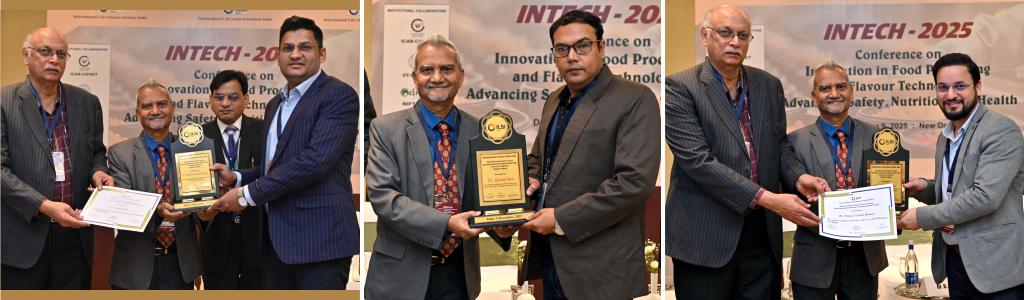
- Dr. Subrota Hati (Dairy Science): Assistant Professor at the SMC College of Dairy Science, Kamdhenu University, Gujarat. He was recognized for his extensive work in dairy microbiology and bioactive peptides and is an elected Fellow of the National Academy of Sciences, India (NASI).
- Dr. Kirtiraj Kundlik Gaikwad (Food Packaging): Based at IIT Roorkee, his research focuses on active and smart packaging, including the development of novel oxygen-scavenging packaging materials from natural sources to extend food shelf life.
- Dr. Khalid Bashir (Food Technology): Recognized for his contributions to advancing food safety and improving nutritional quality through food technology innovations.
INTECH 2025 served as a major international platform focusing on modern food-processing technologies that enhance nutritional value, safety, and functionality of food products. The conference aimed to dispel common misconceptions about food processing while showcasing how science-driven innovations can enable healthier, safer, and more sustainable food systems.
The event coincided with the 80th anniversary of the Food and Agriculture Organization (FAO) and aligned with the Sustainable Development Goals related to hunger, health, and well-being. Emerging technologies, including AI-driven manufacturing and smart packaging solutions in the food sector, were also discussed as key enablers of future food systems.
The Presentations made by 28 Speakers can be downloaded from:https://tinyurl.com/2c69hj3e

Have a news or topic to share with industry? Write to us editorial@pfionline.com