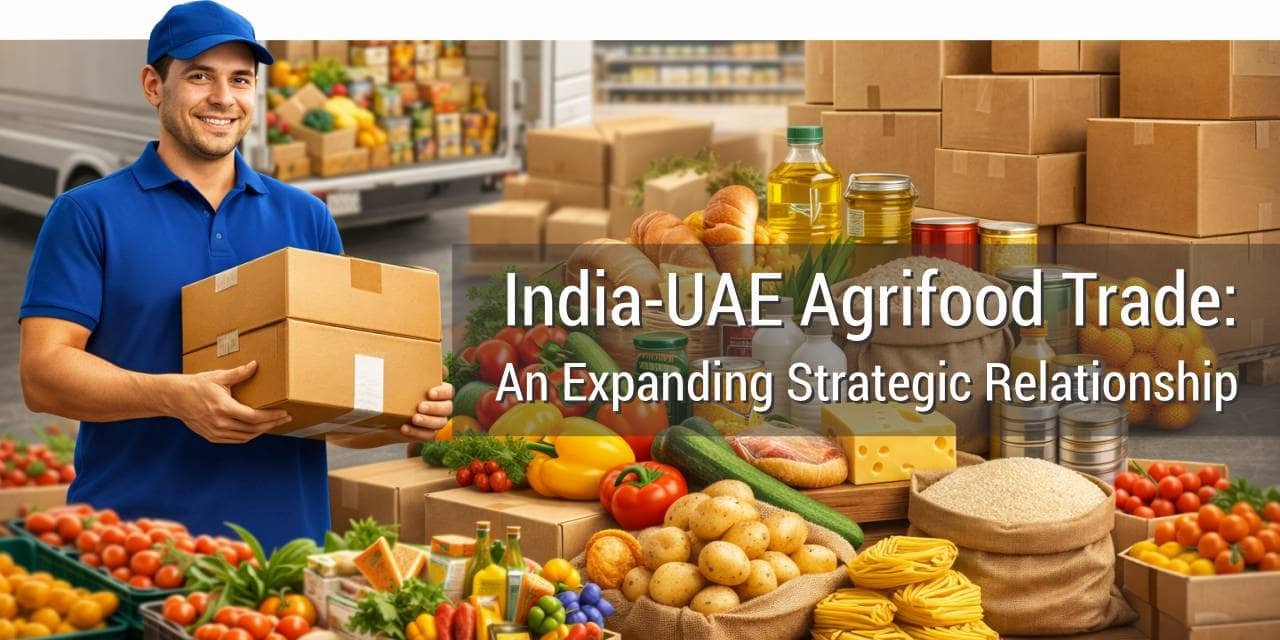
The UAE is one of India’s key agri-food export markets, historically dominated by rice, wheat, bovine meat, and processed foods. CEPA, food corridor investments, and value-added exports are reshaping this partnership. Future growth will depend on India moving beyond staples, opines Saleem A. Taqvi.
India and the United Arab Emirates share a robust and rapidly deepening agrifood trade relationship, anchored in complementary needs: India’s large agricultural production base and the UAE’s food security imperative. This partnership has further strengthened with the a premier strategic partnership, with total bilateral trade crossing US$ 100 billion in FY 2024-25, driven by the Comprehensive Economic Partnership Agreement (CEPA) signed in 2022, which has accelerated growth in both overall non-oil trade and agricultural flows. The UAE is one of India’s top trading partners and a major investment source, with a goal to reach $200 billion in non-oil trade by 2030.
In FY 2024-25, the United Arab Emirates remained one of India’s most significant export markets. Merchandise exports from India to the UAE reached approximately US$ 36.6 billion, up from US$ 28.04 billion in FY 2021-22, reflecting sustained growth in demand across commodities including engineering goods, petroleum products, and agricultural items. Overall, UAE-bound agricultural exports, particularly staples such as rice and other food products, continue to benefit from strong trade linkages under the India-UAE Comprehensive Economic Partnership Agreement (CEPA), which has facilitated expanded market access and efficiency in duty structures.
During my recent visit to the UAE, I was struck by India’s strong representation at Gulfood 2026, where more than 600 Indian exhibitors showcased their products. Reflecting this momentum, the UAE emerged as the second-largest importer of Indian agricultural products in FY 2022-23, with imports valued at approximately US$ 1.9 billion, accounting for 6.9 percent of India’s total agricultural exports. Over recent years, India’s agrifood exports to the UAE have generally ranged between US$ 2.4 and 2.6 billion, reaching around US$ 2.63 billion in 2021-22 on the back of strong demand for Indian staples and value-added foods. By contrast, India’s agricultural imports from the UAE are modest but gradually expanding.
Key Indian exports include rice, wheat, frozen boneless bovine meat, shelled cashew nuts, and a broad range of processed food preparations. Rice and wheat remain central to the bilateral trade basket, reflecting both dietary preferences and the UAE’s reliance on external suppliers for staple foods.
| Also Read: UAE Leads Arab Food and Beverage Sector Investment, Says Dhaman
| Also Read: Collaboration Between India and UAE Essential for Efficient Food Security
India-UAE Food Security Corridor: $7 Billion Investment, Integrated Food Parks and Supply Chain Transformation
Food security has become a defining pillar of the India-UAE relationship. The India-Middle East Food Security Corridor and related initiatives have reinforced long-term cooperation, underpinned by the UAE’s commitment to invest over US$ 2 billion in integrated food parks across India as part of a broader UAE-India Food Security Corridor estimated at around US$ 7 billion.
These investments aim to build end-to-end value chains spanning warehousing, cold storage, food processing, and logistics. Alongside CEPA-enabled tariff reductions and streamlined customs procedures, they are expected to enhance supply chain resilience, encourage agritech collaboration, and secure reliable food supplies for the UAE and neighbouring Middle Eastern markets.
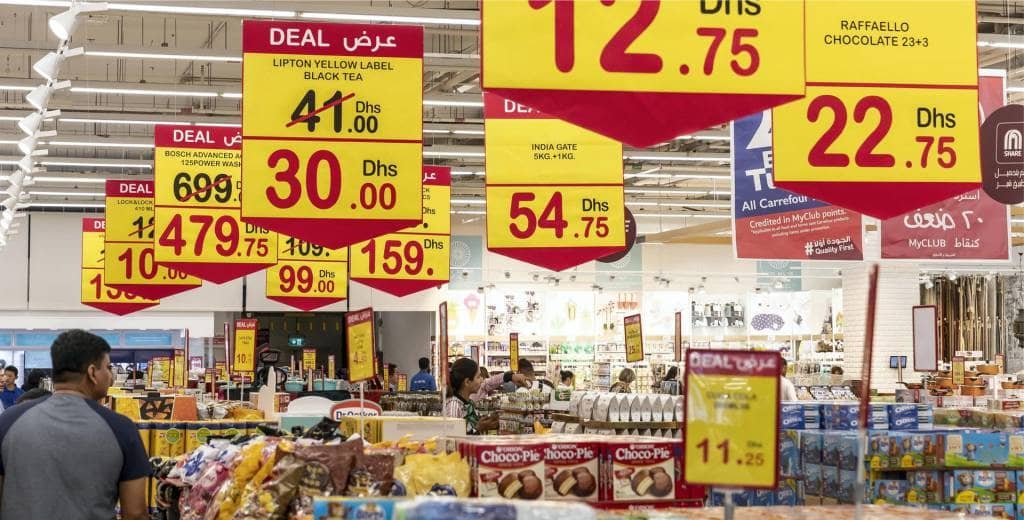
Key Agrifood Export Segments Driving India-UAE Trade Growth Under CEPA
Processed Food Exports to the UAE: Expanding India’s Market Share in High-Value Food Preparations
Food preparations, not elsewhere specified, represent the UAE’s second-largest agricultural import category, valued at about US$ 720.6 million in the triennium ending 2022-23 (TE23). India supplies roughly 9.6 per cent of this demand (around US$ 69 million), ranking as the second-largest exporter after the United States.
Given India’s geographical proximity, strong logistics connectivity, and preferential access under CEPA, there is substantial scope to expand exports of higher-value processed foods. Targeted product development for Gulf tastes, stronger branding in modern retail, and closer collaboration with UAE importers could allow India to narrow, and potentially overtake, the US market share over time.
| Also Read: UAE Aims for 20,000 Food Sector Jobs and $10B GDP Boost by 2030
Bakery and Biscuit Exports to the UAE: Market Potential and Competitive Landscape
Bread, pastry, cakes, biscuits, and other bakers’ wares rank around 12th among the UAE’s agricultural imports, with imports valued at approximately US$ 359.6 million in TE23. India’s exports in this category remain limited at about US$ 12.4 million, or roughly 3.5 per cent of UAE imports, placing India around tenth among suppliers.
Despite CEPA preferences, intra-Middle East trade dominates this segment, and competition from large suppliers such as the United States constrains India’s expansion, particularly in branded biscuits, sweet baked goods, and frozen bakery products.
Frozen Boneless Bovine Meat Exports: India’s Competitive Position in the UAE Market
The UAE imported frozen, boneless bovine meat worth about US$ 357.7 million in TE23. India supplied approximately US$ 92.1 million, making it the second-largest exporter after Brazil. This performance is notable given India’s strong global position in bovine meat exports.
To consolidate and expand its share, India needs to promote internationally recognised disease-free zones, strengthen compliance with OIE and Gulf standards, invest in cold-chain infrastructure, and build stronger branding to reinforce confidence in Indian-origin meat products.
Rice Exports to the UAE: India’s 70% Market Share and Strategic Importance
India plays a central role in meeting the UAE’s rice demand across basmati, non-basmati, and parboiled varieties. In 2023, India exported rice worth roughly US$ 460-470 million to the UAE. Semi-milled or wholly milled rice is the UAE’s fifth-largest agricultural import category, with global imports valued at about US$ 520.6 million in TE23.
India accounted for approximately US$ 366.6 million of this total, about 70.4 per cent, far ahead of Pakistan and Vietnam. With import duties effectively zero for key suppliers, India’s dominance reflects entrenched trade relationships and established consumer preferences.
India’s Rice Export Policy and Its Impact on UAE Food Security
India’s rice export policies have a direct impact on this corridor. In 2023, the Indian government relaxed certain restrictions on non-basmati white rice and permitted a quota of 75,000 tonnes specifically for export to the UAE, recognising the strategic importance of the partnership and the UAE’s food security concerns.
Looking ahead, the priority is to maintain India’s dominant market position while ensuring domestic food security and price stability, so that abrupt export bans or tight quantitative restrictions can be avoided.
Moving Up the Value Chain: Diversifying India’s Agrifood Exports to the UAE
While India already has a strong foothold in several agrifood categories in the UAE, much of its current advantage lies in low-processed commodities. Deepening the relationship will require expanding volumes and moving decisively up the value chain.
India and the UAE now operate under a comprehensive CEPA, not a limited Preferential Trade Agreement. Strategies to expand exports of eggs, bakery products, pasta, paneer, and other processed foods should therefore leverage CEPA’s tariff concessions and rules-of-origin provisions, rather than seek new or parallel trade arrangements.
Growth Opportunities in Potatoes, Pasta and Egg Exports to the UAE
India’s exports of fresh or chilled potatoes to the UAE remain modest at around US$ 3 million in TE23, with Egypt and Pakistan supplying about half of the UAE’s demand. Improved varietal selection, stronger cold-chain management, and reliable year-round shipping could help India expand its share.
UAE pasta imports are relatively small, at around US$ 20-25 million in TE23, but India already ranks among the leading suppliers. India’s wheat-based processing strength offers scope to expand through competitively priced private-label, wholegrain, or fortified pasta tailored to UAE retail and HORECA buyers.
In eggs, despite India’s large production base, Türkiye and Oman dominate the UAE market. Expansion will require consistent disease-free certification, strict SPS compliance, and clearer veterinary protocols negotiated under CEPA, potentially supported by longer-term government-to-government supply arrangements.
High-Growth Segments: Fruits, Nuts, Honey and Ghee Exports to the UAE
India is already among the top suppliers to the UAE for a wide range of fresh and dried fruits, nuts, and animal products, including bananas, guavas, mangoes, mangosteens, pomegranates, grapes, groundnuts, cashew nuts, natural honey, and ghee. In many of these categories, India ranks first or second.
The strategic focus should be on maintaining volumes and quality while expanding into value-added formats such as fruit pulps and purées, dried slices, snack packs, flavoured nuts, honey-based spreads, and clarified-butter-based products. Value addition can reduce seasonality, smooth price volatility, and align better with the UAE’s demand for branded and premium offerings.
| Also Read: Sharjah Ruler Inaugurates Mleiha Dairy Farm Factory
Sweet Biscuits and Paneer Exports: Capturing Premium Retail Demand in the UAE
Sweet biscuits represent a growing market in the UAE, currently led by suppliers such as the UK and Bahrain, while India holds only a 6-7 per cent share. Aligning flavours and formats with local preferences, such as date-filled, cardamom-flavoured, or chocolate-coated biscuits, combined with strong branding and CEPA-enabled cost advantages, could materially expand India’s presence.
Paneer imports are dominated by Italy and Saudi Arabia, with India holding a relatively small share despite its scale and cultural familiarity with the product. Certified export-oriented plants, consistent cold-chain handling, and co-branding with Indian restaurant chains and retail brands already active in the Gulf could help India build a stronger foothold.
Outlook: Scaling India-UAE Agrifood Trade Beyond Commodities
CEPA, combined with the India-UAE food security corridor and large-scale investment commitments, has transformed the bilateral agrifood relationship from a traditional trade corridor into a strategic partnership. The foundations are firmly in place. The next phase will depend on India’s ability to move beyond staples, deepen value addition, and align its agrifood exports more closely with the UAE’s evolving consumer preferences and food security priorities.
💡 India-UAE Agrifood Trade: FAQs
Total bilateral trade crossed US$ 100 billion in FY 2024-25, with a target of US$ 200 billion in non-oil trade by 2030.
CEPA reduced tariffs and improved market access, boosting rice, processed food, and meat exports.
Rice, wheat, frozen boneless bovine meat, cashew nuts, processed foods, fruits, nuts, honey, and ghee.
India supplies over 70% of the UAE’s rice imports, making it a cornerstone of trade.
A US$ 7 billion strategic initiative including over US$ 2 billion in UAE investments in India’s food infrastructure.
Export controls directly affect supply stability; India allowed a 75,000-tonne quota in 2023.
Food preparations, bakery, pasta, paneer, and value-added fruit products.
India is the second-largest supplier, exporting over US$ 90 million annually.
Greater value addition, branding, cold-chain expansion, and CEPA-driven diversification.
References
- India-UAE Trade at $100 bn since signing CEPA, Economic Times, Jul 22, 2025. https://economictimes.indiatimes.com/news/economy/foreign-trade/india-uae-trade-at-100-bn-since-signing-cepa/
- India-UAE CEPA, Non-Oil Trade, and Transshipment of Goods, Middle East Briefing. https://www.middleeastbriefing.com/news/india-uae-cepa-non-oil-trade-and-transshipment-of-goods/
- Overview of India-UAE Commercial Relations, Consulate General of India. https://www.cgidubai.gov.in/page/overview-of-india-uae-commercial-relations/

Have a news or topic to share with industry? Write to us editorial@pfionline.com