India’s fish production reaches 197.75 lakh tonnes in 2024-25, doubling in a decade. Government schemes boost exports, employment, and global competitiveness in the fisheries sector.
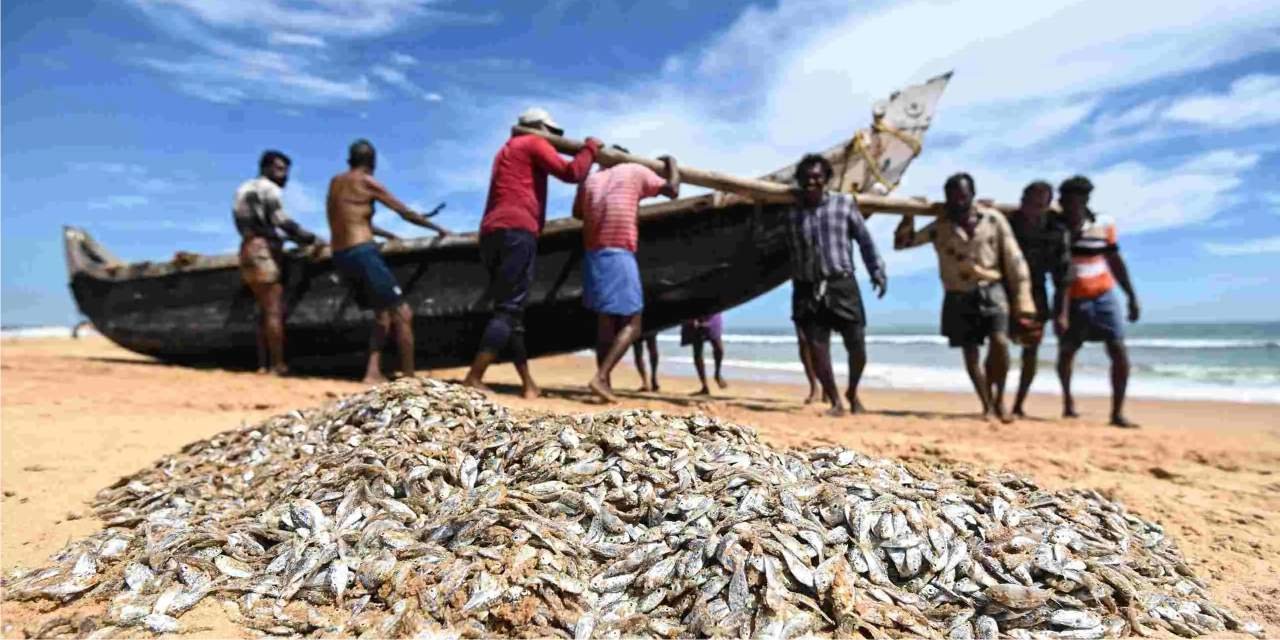
According to a factsheet recently released by the Central government, India’s fish production has more than quadrupled over the last decade, reaching 197.75 lakh tonnes in 2024-25 from 95.79 lakh tonnes in 2013-14, making it the world’s second largest producer of marine products.
According to the official statement, fisheries-related schemes introduced since 2014-15 have created an estimated 74.66 lakh direct and indirect job opportunities, demonstrating the sector’s growing importance in inclusive and sustainable economic growth. Concurrently, seafood exports grew significantly, reaching Rs 62,408 crore in FY 2024-25. Frozen shrimp remains the most important export product, with the United States and China serving as significant markets, demonstrating the sector’s growing scale and worldwide competitiveness.
India now accounts for around 8 per cent of global fish output, and with the Union Budget 2026-27 earmarking the highest-ever total annual support of Rs 2,761.80 crore for the sector, the country’s fish production is poised to accelerate further. Of this total outlay, Rs 2,530 crore is earmarked for implementation through targeted government schemes, including financial assistance, capital subsidies, insurance coverage, capacity-building initiatives, infrastructure development, and welfare support mechanisms designed to directly benefit fishers and fish farmers.
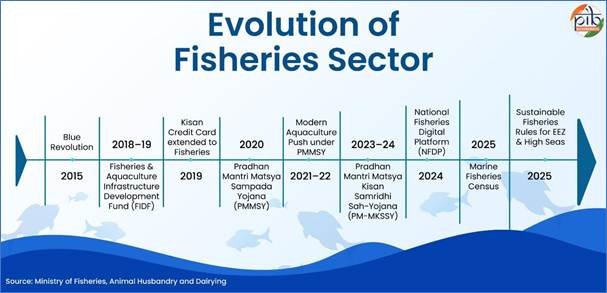
The fisheries sector is a critical contributor to India’s economy, supporting the livelihoods of nearly three crore people, particularly among marginalised coastal and inland communities.
Policy Initiatives for Risk Mitigation and Financial Security
The government has focused on improving the financial security of fishers and fish farmers through targeted schemes that bring them into the formal system and expand access to credit, insurance, and income support.
Pradhan Mantri Matsya Kisan Samridhi Sah-Yojana (PM-MKSSY)
The Pradhan Mantri Matsya Kisan Samridhi Sah-Yojana (PM-MKSSY) is a Central Sector sub-scheme implemented under the umbrella of the PMMSY. Operational across all States and Union Territories for a four-year period from 2023–24 to 2026–27, it carries an estimated financial outlay of ₹6,000 crore.
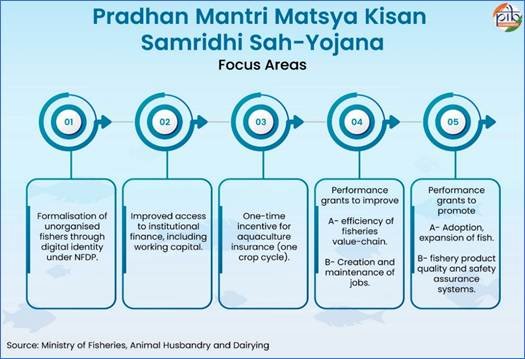
The scheme facilitates the structural transformation of the fisheries sector by advancing formalisation, expanding insurance coverage, strengthening access to institutional finance, and promoting quality assurance and traceability across the fisheries value chain. It aims to enhance financial resilience, risk mitigation, and market integration for fishers, aquaculture farmers, and allied stakeholders, thereby fostering a more organised, transparent, and sustainable fisheries sector.
Kisan Credit Card for Fisheries
The Kisan Credit Card (KCC) scheme has become a pivotal instrument for advancing financial inclusion within India’s agrarian economy. Structured to provide timely and affordable access to working capital, it enables farmers to finance the purchase of critical inputs and meet liquidity requirements for crop cultivation and allied activities.
Since 2019, the scope of the scheme has been expanded to include animal husbandry, dairy, and fisheries, thereby extending access to institutional credit to allied agricultural sectors and promoting integrated rural livelihoods. The Government has raised the lending limit under the KCC scheme for fisheries and allied activities from Rs 2 lakh to Rs 5 lakh, thereby improving access to credit for fishers, farmers, processors, and other stakeholders.
As per the Economic Survey 2024-25, financial inclusion and welfare programmes have extended KCC benefits to 4.39 lakh fishers, providing insurance coverage to 3.3 million beneficiaries, and delivering livelihood assistance to an average of 7.44 lakh fisher families during lean periods. This underscores the role of formal credit in enhancing resilience, stabilizing incomes, and deepening integration with organized markets.
Fisheries and Aquaculture Infrastructure Development Fund (FIDF)
FIDF was launched in 2018–19 to strengthen infrastructure across marine and inland fisheries and promote sustainable sectoral growth. To continue this momentum, the Government extended the FIDF scheme for three more years, from April 2023 to March 2026. The scheme offers a credit guarantee cover of up to Rs 12.50 crore, helping fishers and entrepreneurs access much-needed credit with lower financial risk. It also provides an interest subvention of up to 3% per year under the FIDF. This support helps Nodal Loaning Entities offer concessional finance at a minimum interest rate of 5% per year.
National Fisheries Digital Platform (NFDP)
The Department of Fisheries launched the National Fisheries Digital Platform (NFDP) in September 2024 under the PM-MKSSY to advance digital governance and formalization in the fisheries and aquaculture sector. At the foundational level, NFDP generates work-based digital identities for fishers, fish farmers, cooperatives, enterprises, and other value chain stakeholders. It is simultaneously building a centralised national database to improve transparency, streamline service delivery, and support data-driven policymaking.
Operationally, NFDP functions as a single-window digital system that enables beneficiaries to access institutional credit, aquaculture insurance, traceability mechanisms, and performance-linked incentives. The platform also supports the strengthening of fisheries cooperatives and facilitates training and capacity-building initiatives.
As of 05 March 2026, the platform has registered over 30.60 lakh stakeholders, integrated 12 banks onto a common digital framework, and enabled the disbursement of 217 loans, thereby promoting formalization, financial inclusion, and efficiency across the fisheries value chain.

Have a news or topic to share with industry? Write to us editorial@pfionline.com