
The world is talking about blockchain technology and how it could change the way we look at our supply chains. The fact that Blockchain technology in the food supply chain enables users to track ownership records. It is also tamper-resistant, which makes blockchain technology ideal for the food industry. In fact, it can stop spoilage and ensure safety recalls, writes Elaine Shuang Qiu. Learn about challenges, global case studies, and its future potential in India.
Table of Contents
Food safety is of paramount importance for a healthy society, and nowhere is it more of an absolute must than in India. Most foodborne illnesses, in fact, go unreported in the country. Added to that is the fact that the country faces poor environmental sanitation, lack of safe water, and poor disease surveillance.
In these circumstances, the government of India introduced the Food Safety and Standards Act 2006 to overcome the deficiencies in the Prevention of Food Adulteration Act, 1954.
The Food Safety and Standards Authority of India (FSSAI) was set up as an autonomous body under the Ministry of Health & Family Welfare. It was established under the Food Safety and Standards Act, 2006 which is a consolidating statute related to food safety and regulation in India and is responsible for protecting and promoting public health through the regulation and supervision of food safety.
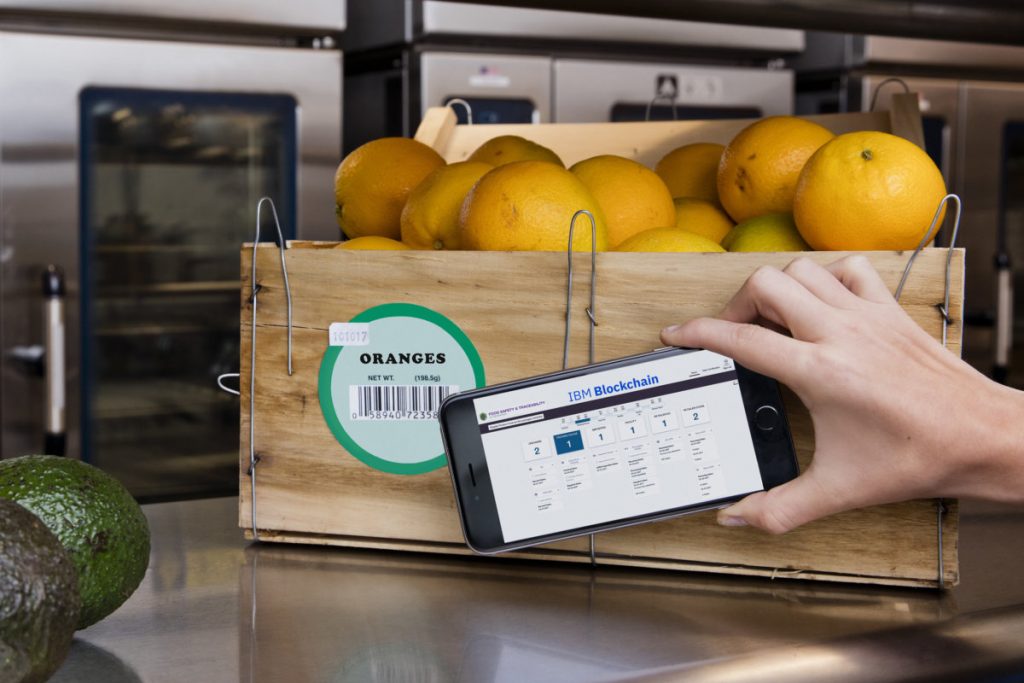
For food to be totally safe, food traceability is of prime importance and this is where blockchain technology can be put to use. It is all the more necessary since food, by its very nature, is perishable, and when foodborne diseases threaten public health, the first step is to track down the source of contamination through blockchain technology.
Today, despite the country’s leaps in IT and communication, tracing from farm to fork remains a time-consuming and ineffective issue primarily because a number of those involved continue to use paper. However, that will not be the case with blockchain since it ensures that each player along the food value chain will generate and securely share data points to create an accountable and traceable system. Vast data points with labels that clarify ownership can be recorded promptly without any alteration. As a result, the record of a food item’s journey, from farm to table, is available in real-time.
Advantages of Blockchain technology in food supply chain
Other than food safety, Blockchain technology in food supply chain has other advantages. It adds value to the current market by establishing a ledger in the network and balancing market pricing. The usual way of buying and selling only has the views of two sides – the buyer and the seller – and does not take into account what is going on in the market. With blockchain technology, any user can get a comprehensive picture of supply and demand. According to experts, blockchain technology for trades could change the way commodity trading and hedging is done. Blockchain technology enables verified transactions to be securely shared with every player in the food supply chain, creating a marketplace with immense transparency.
Concerns about blockchain technology in food supply chain
However, blockchain technology in food supply chain faces problems. And, it is these problems that raise doubts about the implementation of the blockchain technology in food supply chain.
To begin with, the food supply chain involves the participation of a number of players: farmers, wholesalers, buyers, and distributors. Add to that the fact that a typical agricultural production site that desires to usher in blockchain technology would have to contend with a wide variety of products, storage methods, handling processes, etc. The process of data collection, therefore, has to be modified and changed to suit the requirements of the blockchain users.
One of the major concerns about the use of blockchain is data transparency. Even if farmers were to mention the use of pesticides, would such information help the distributor, especially among health-conscious buyers today? Also, any information about pesticides, etc, might hamper the creation of a level playing field for all participants in the blockchain technology. According to experts, blockchain could transform commodity markets, as discussed in food and beverage market innovations.
Blockchain applications in Food Industry
There are also doubts about blockchain handling large quantities of data, especially those related to trading. According to experts, very little attention has been paid to blockchain applications in trade. A report mentions that “we have been seeing the blockchain applications mainly from large organizations because they have the infrastructure – both technical systems and data already in place – to support the automation of processing data at a farm level”.
Constraints of the blockchain
However, “as one of the constraints of the blockchain, the structure and scales have to be carefully planned out, as each transaction added to the blockchain would increase the size of the database. Either a smaller ledger (not every node can carry a full copy of the blockchain) or a more centralized control should be built into the network. As a result, large pilots are demanded by corporations to test the limits of blockchain technology before it even establishes”. For more on addressing such challenges, explore emerging technologies in food processing.
Blockchain technology has evolved and is easily available
What is important to note is that over the last few years, blockchain technology has evolved and is easily available today for the food sector. There are a number of innovators like Bext360 that use IoT, blockchain, machine learning, and artificial intelligence to set up a fully-transparent food supply chain. Among the others are IBM Food Trust, ChainTrade, Farm2Kitchen, ripe.io, Arc-net, Avenues-GT, Owlchain, and TE-Food. All of them are working to counter the challenges mentioned and create the next phase of blockchain applications from different angles.
What is the future of blockchain technology in food supply chain
What then is the future when handicaps – for example, it is impossible to identify a precise point at which a product was contaminated and assessing the losses for the distributor can take weeks – exist? Perhaps, what is heartening to note is that major food companies, including Nestlé, Unilever, Walmart, Dole, Driscoll’s, Golden State Foods, Kroger, McCormick and Company, McLane Company and Tyson Foods, have integrated a blockchain to work on the traceability of perishable food products and prioritise the areas where technology could be useful. Blockchain enables real-time tracking, offering benefits like those experienced in global traceability initiatives.
The results these companies have achieved are worthwhile. Way back in 2016, Walmart did a study for the development of a blockchain for pork in China. In fact, it took the company only a few minutes to retrace the origin of their products instead of several days. The tracked data included information on the products’ origin, their batch number, the factory from which they came, the processing methods, as well as the expiration date, temperature during storage, and even distribution details. Discover more about technological innovations in food safety.
With such advantages, Indian farm producers and food processing companies need to seriously take a look at ushering in the blockchain. Once implemented, it will help the economy and the well-being of the Indian consumer.
FAQs: Blockchain Technology in Food Supply Chain
Blockchain technology in the food supply chain refers to a secure, decentralized digital ledger that records every step of food production, processing, and distribution. It enables all stakeholders, from farmers to retailers, to access verified, tamper-proof data about food products, ensuring greater transparency and safety.
Blockchain allows for real-time tracking of food products “from farm to fork.” Each transaction or handling stage is securely recorded, helping identify the exact source of contamination or fraud within minutes. This rapid traceability significantly reduces foodborne illness risks and enhances consumer trust.
Key benefits include: • Improved food safety and quality assurance • Transparency across all participants in the supply chain • Faster recall management during contamination events • Fair market pricing through real-time visibility of demand and supply • Reduced paperwork and greater operational efficiency
Some major challenges include: • Complexity in data collection due to diverse agricultural products and storage conditions • Concerns around data transparency and fair access to information • High infrastructure costs and technical barriers for small-scale farmers • Scalability issues, as the blockchain database grows with every transaction
Yes. Global food giants like Walmart, Nestlé, Unilever, and Dole have successfully implemented blockchain systems. For example, Walmart’s blockchain pilot in China reduced the time to trace pork origin from several days to just a few minutes, proving its efficiency and reliability.
In India, the Food Safety and Standards Authority of India (FSSAI) has been exploring the integration of blockchain to strengthen food traceability and ensure compliance under the Food Safety and Standards Act, 2006. Startups such as Farm2Kitchen and Avenues-GT are already piloting blockchain-based food tracking systems.
The future looks promising as blockchain continues to evolve with AI, IoT, and machine learning. Once widely implemented, it can drastically reduce food fraud, improve trade efficiency, and boost consumer confidence in food safety standards—particularly vital for India’s growing food sector.
Yes. Although initial implementation costs can be high, blockchain provides long-term benefits such as access to better markets, fair pricing, and proof of product quality. With government support and affordable digital tools, small producers can integrate into transparent, traceable food systems.

Have a news or topic to share with industry? Write to us editorial@pfionline.com