ILSI India’s SafeFoodChain 2026 conference in New Delhi examined food contaminants, risk assessment, surveillance and preventive approaches to food safety.
Food safety is increasingly recognized as a critical priority for governments, regulators, industry, scientists and consumers. As food supply chains become more interconnected and complex, protecting food integrity from farm to fork requires sound scientific evidence, effective risk management, advanced analytical capabilities and collaboration across the food system.
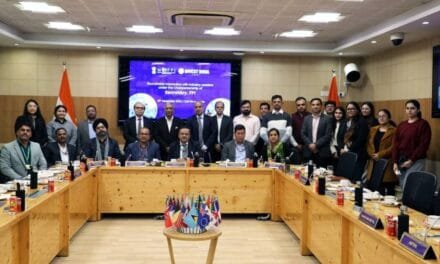
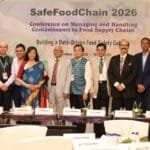
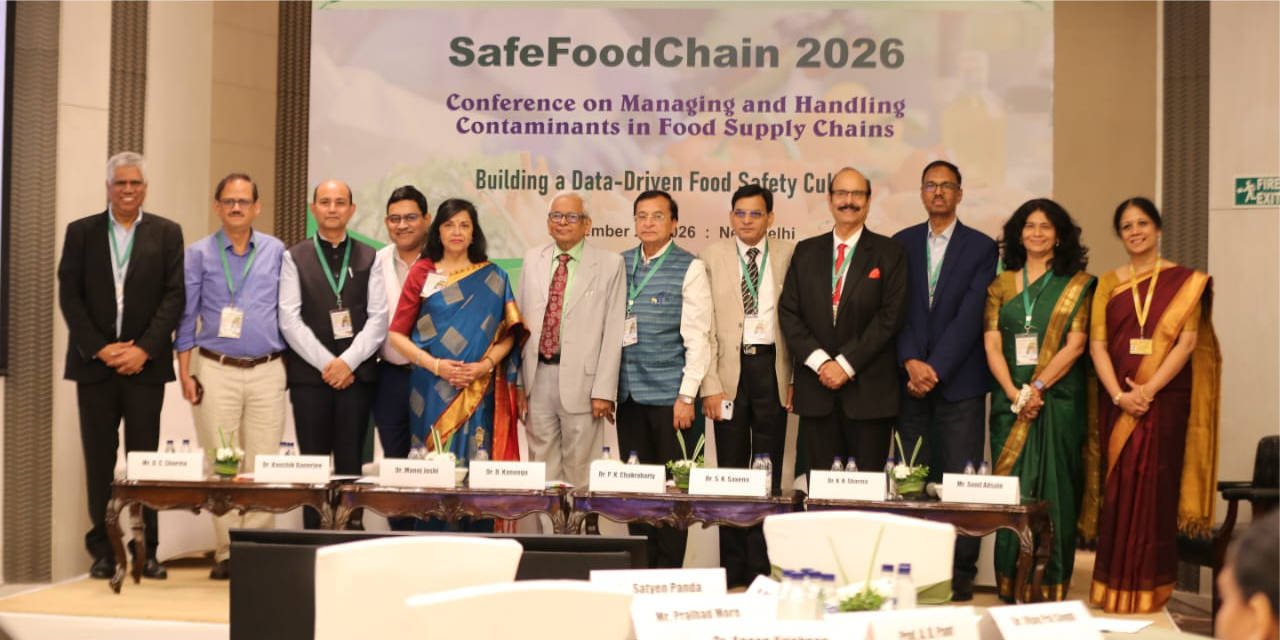
ILSI India held its scientific conference, “Managing and Handling Contaminants in Food Supply Chains – SafeFoodChain 2026,” on 23 September in New Delhi. Held under the theme “Building a Data-Driven Food Safety Culture,” the conference brought together experts from government, regulatory bodies, research institutions, industry and other organizations to examine emerging challenges in food contamination and risk management.
The opening keynote and four technical sessions covered contaminants across food supply chains, monitoring and detection methods, risk analysis, regulatory frameworks and food business operator due diligence. Discussions focused on key hazards including pesticide residues, heavy metals, inorganic arsenic, mycotoxins, veterinary drug residues and antimicrobial resistance (AMR).
| ALSO READ: FSSAI Compliance: 5 Step Guide for Food Businesses in India
| ALSO READ: FSSAI to Mandate Scientific Evidence for Food Safety Reviews
Dr. Gyanendra Gongal, Public Health Expert, delivered the keynote address on “Situational Analysis of Food Supply Chains: Implications for Food Safety and Public Health.” The valedictory address was delivered by Dr. D. Kanungo, former Additional Director General, Ministry of Health and Family Welfare and an internationally recognized food safety expert.
Other speakers included Dr. Manoj Joshi, President, ILSI India; Dr. Satyen Kumar Panda and Dr. Kavitha Ramasamy of the Food Safety and Standards Authority of India (FSSAI); and Dr. Annop Krishnan of the Export Inspection Council of India.
In his address, Dr. Kanungo highlighted the growing public health and economic importance of managing contaminants across increasingly interconnected food supply chains. Referring to recent WHO estimates on the burden associated with chemical hazards, he emphasized that food integrity must be addressed through a One Health approach. He outlined the 3M principle – Mapping, Monitoring and Mitigation – as a practical framework for applying scientific evidence, risk assessment and shared accountability to food safety.
The conference also featured scientific and technical perspectives from Dr. Kaushik Banerjee (NRCG); Dr. K. K. Sharma and Dr. Vandana Tripathi (IARI); Dr. Pranjib Kumar Chakraborti (ICAR); Prof. V. P. Sharma and Dr. A. B. Pant (IITR); Dr. Sarita Bhalla (Consultant, Pharmacology); Dr. Vasanthi Siruguri (NIN); Dr. K. R. Bhileganonkar (IVRI); Dr. Dinesh Kumar (NIFTEM); Dr. Vijay Pal Singh (CSIR-IGIB); Dr. K. L. Gujjar (CIB&RC); and Mr. Durgesh Chander Sharma (CropLife Asia), among others from academia, research and industry.
A central message emerging from the conference was the need to move beyond reliance on end-product testing towards a science-based, preventive approach to food safety. Participants emphasized stronger surveillance throughout the food chain, greater accountability from farm to fork and closer alignment with international standards to protect consumers and facilitate trade.
The key recommendations included:
- Regulatory harmonization and alignment with international standards
- Strengthening national surveillance and risk assessment
- Improving laboratory infrastructure and analytical capabilities
- Promoting on-farm practices that reduce contamination risks
- Strengthening food business operator due diligence and traceability
- Advancing research, capacity building and collaboration among agencies and stakeholders
The National Institute of Food Technology Entrepreneurship and Management (NIFTEM) also presented a display of rapid detection technologies developed by its researchers for on-site detection of contaminants and pesticide residues. The demonstration highlighted the potential of rapid analytical tools to support timely decision-making and corrective action across the food supply chain.
SafeFoodChain 2026 reinforced the importance of bringing science, regulation, industry and public health perspectives together to address food safety risks. ILSI India said it will continue to promote scientific exchange and collaboration among stakeholders to support evidence-based food safety practices.
| ALSO READ: Food Safety Compliance: A Smart Investment Against Costly Failures
| ALSO READ: Food Safety Failures in India: Regulatory Gaps, Adulteration Trends, and the Way Forward

Have a news or topic to share with industry? Write to us editorial@pfionline.com