BARC releases Kaveri Vaaman (TBM-9), India’s first mutant banana variety developed through gamma irradiation. The dwarf, lodging-resistant banana offers shorter crop cycles, lower input costs, and suitability for high-density and terrace cultivation.
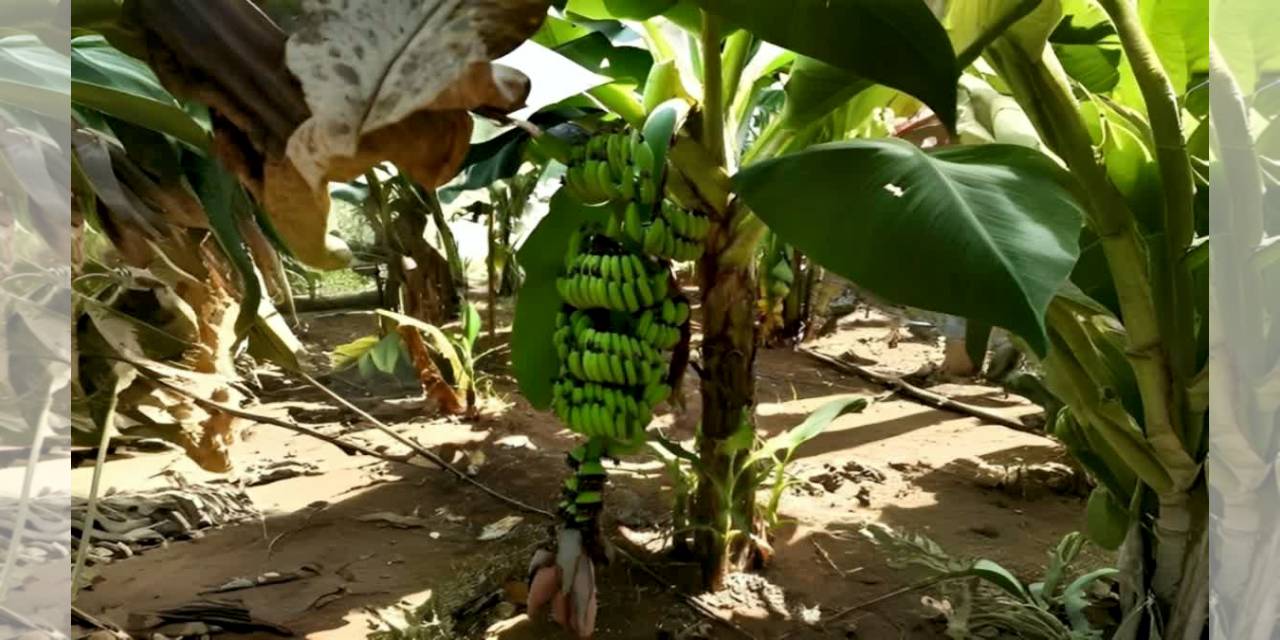
November 2025: India has introduced a new dwarf banana variety, Kaveri Vaaman, developed by the Bhabha Atomic Research Centre (BARC) to reduce lodging risk and shorten the crop cycle. Classified as India’s first mutant banana variety and the first fruit crop developed and released by BARC, the variety represents a significant milestone in the country’s mutation breeding efforts.
Formally named Trombay Banana Mutant-9 (TBM-9), the variety originates from the widely cultivated Grande Naine cultivar. Using gamma–ray–induced mutagenesis, BARC scientists achieved key improvements that address long-standing challenges faced by banana growers.
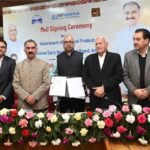
Ajit Kumar Mohanty of the Department of Atomic Energy described the release of TBM-9 as “a major step in revolutionising the improvement of horticultural crops in India through the use of ionising radiation.” Speaking at BARC Founder’s Day 2025, BARC Director Vivek Bhasin underscored the crucial role of mutation breeding in strengthening sustainable agriculture. He highlighted that the new dwarf variety will benefit farmers growing the economically important Grande Naine banana, while also demonstrating BARC’s expansion into breeding fruit and other vegetatively propagated crops.
BARC identifies short stature as the defining trait of Kaveri Vaaman. The reduced height significantly enhances lodging resistance, addressing a common problem in conventional banana cultivation, especially in coastal regions prone to strong winds. Tall banana plants typically require bamboo or wooden supports to prevent lodging, but BARC notes that the new dwarf variety eliminates this need, resulting in lower input costs.
Kaveri Vaaman also features a shortened maturity period, approximately 1.5 months earlier than its parent, allowing quicker harvests and improved turnover for growers. Despite these changes, the fruit retains the familiar organoleptic qualities of Grande Naine. The variety is suitable for high-density planting, terrace cultivation, and both commercial and household production systems.
The development of Kaveri Vaaman was carried out in collaboration with the Indian Council of Agricultural Research (ICAR) and the National Research Centre for Banana (NRCB), Tamil Nadu. Grande Naine was mutagenised with gamma radiation, followed by several years of rigorous screening and field trials before TBM-9 was selected. Dr. Mohanty emphasized that crop improvement is an integral part of the Department of Atomic Energy’s mission to leverage nuclear science for societal benefit. He highlighted that the release of 72 improved crop varieties to date reflects the department’s ongoing contribution to Indian agriculture, noting the vital support of ICAR institutes and State Agricultural Universities in evaluating and releasing these varieties.

Have a news or topic to share with industry? Write to us editorial@pfionline.com