
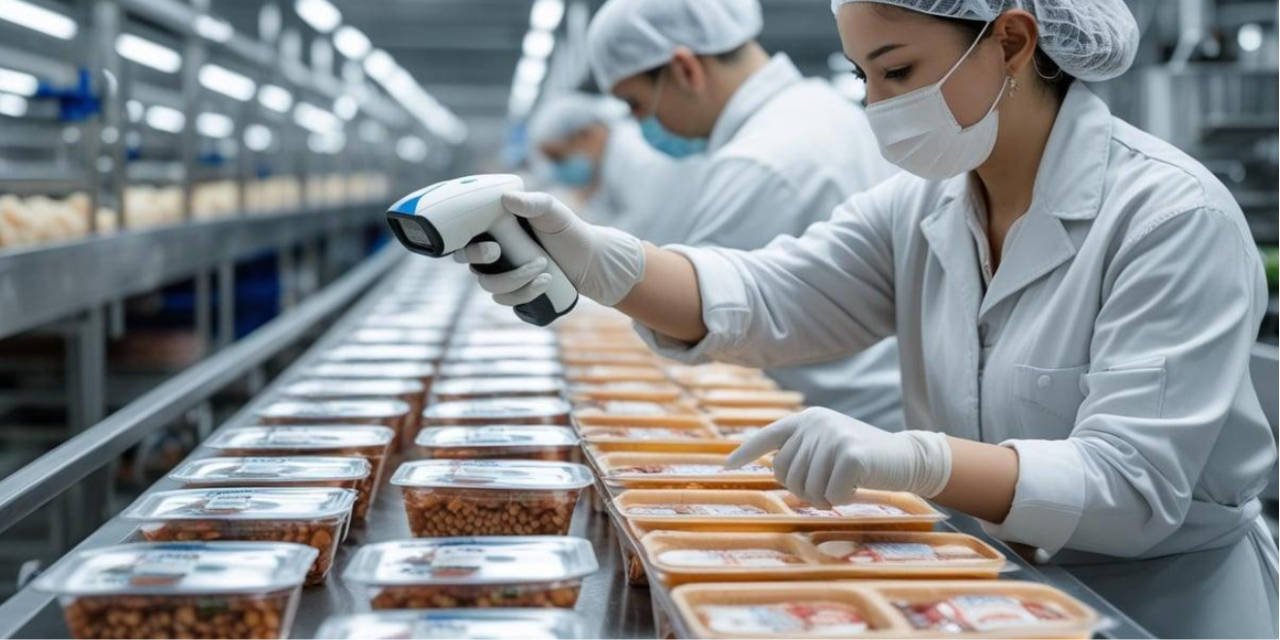
A reliable food traceability system must do more than connect lot numbers. Food processors need to test how employees handle missing records, conflicting data and recall decisions to ensure accountability and protect consumers. Gleb Tsipursky explains how exception drills, audit trails and human oversight can strengthen recall readiness and FDA compliance.
Today, the U.S. Food and Drug Administration is asking a question food processors should ask themselves: What happens when a lot number points to the wrong shipment? Its November 6 meeting on lot-level traceability gives Indian suppliers to U.S. buyers a reason to run an exception drill before buying another tracking dashboard. If a recall begins tomorrow, the team must be able to prove which products moved where and explain what happens when the records disagree.
Under the FDA’s Food Traceability Rule, certain listed foods require additional records for specific critical tracking events. The scope reaches foreign firms producing covered foods for U.S. consumption, with exemptions and the precise activities determining individual obligations. Congress has directed FDA not to enforce the rule before July 20, 2028. That gives processors time to build dependable practices. It should not be mistaken for evidence that a broken traceability chain is harmless.
The difficult part often appears between systems and people. A supplier writes one lot code on an invoice. Receiving staff enter a shortened version. A production shift blends ingredients from different deliveries. A warehouse dispatch note identifies the finished product but leaves the source batch ambiguous. Software may join the records and produce a confident-looking answer. A quality manager still needs to distinguish a documented match from a plausible guess.
Food businesses can start with a forty-five-minute exercise. Pick one product family, ideally one involving multiple suppliers or handoffs. Give purchasing, receiving, production, quality, and dispatch the same fictional recall alert. Ask each team to trace a suspect ingredient to the finished products and buyers. Then deliberately remove one document, alter one digit in a lot code, and introduce a delayed supplier correction. Watch where people hesitate, where they improvise, and who has authority to quarantine stock.
Measure more than how quickly someone clicks through the traceability system. Record the time until the team identifies the first inconsistency, the time until it pauses an unsafe shipment, the percentage of lot links supported by source records, and the time until it can communicate a defensible product boundary. A five-minute answer with an invented link deserves a worse score than a fifteen-minute answer that isolates the uncertainty.
The next step is an exception ledger. For every discrepancy, record the affected lot, the missing or conflicting evidence, the responsible decision-maker, the temporary product hold if any, the correction, and the supporting record. Keep an audit trail of what changed and when. Repeated entries expose a process problem: perhaps suppliers send inconsistent labels, perhaps night shifts lack access to records, or perhaps nobody owns the decision to stop dispatch.
Artificial intelligence can help extract fields from invoices, compare manifests, and flag inconsistent codes. But a model that fills a missing lot number from its best guess may turn uncertainty into false confidence. Set a simple boundary: AI may propose a match and show the evidence, while a designated employee validates the link and authorizes any release. When evidence is missing, the output must say so. Train staff to challenge an answer that looks tidy but lacks a traceable record.
The FDA is also considering draft enforcement discretion for some smaller U.S. retail establishments and restaurants. That proposal should not be confused with a blanket exemption for exporters. Indian processors already have a useful starting point in the Food Safety and Standards Authority of India’s sector guidance, which emphasizes practical food-safety systems across manufacturing, packing, storage, and transport. Use those familiar responsibilities to assign ownership of traceability exceptions.
An organization can have a technically impressive platform and still fail its first real recall because its staff do not know when to distrust an answer or who can stop a shipment. The most valuable test is deliberately imperfect. Make the record disagree, let employees discover the gap, and require them to document the judgment that protects the customer.
About the Author: Dr Gleb Tsipursky, PhD, a behavioral scientist, CEO of Disaster Avoidance Experts, and author of The Psychology of AI Adoption at Work: From Resistance to Results (Georgetown University Press, 2026). Learn more at https://disasteravoidanceexperts.com/aibook
Photo Courtesy: NotaZone

Have a news or topic to share with industry? Write to us editorial@pfionline.com